
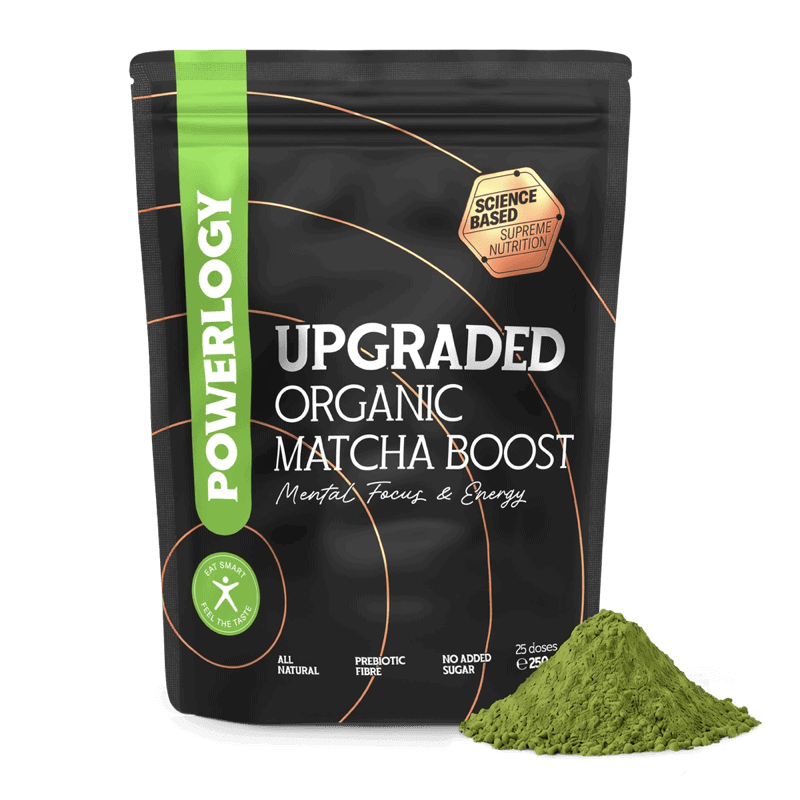
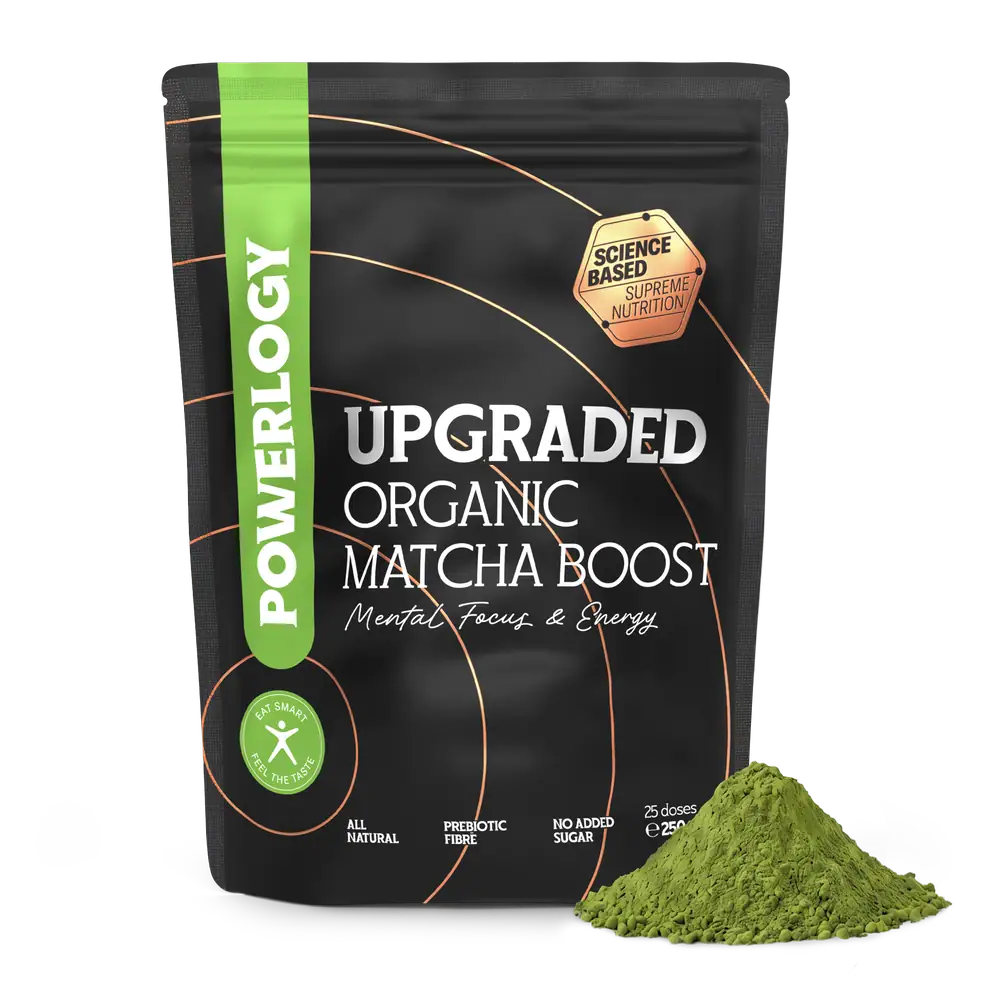
Powerlogy™ Upgraded Organic Matcha Boost
BIO Matcha superfood mix with coconut milk and prebiotic fibre for mental focus



Save food






What matters in 20 seconds
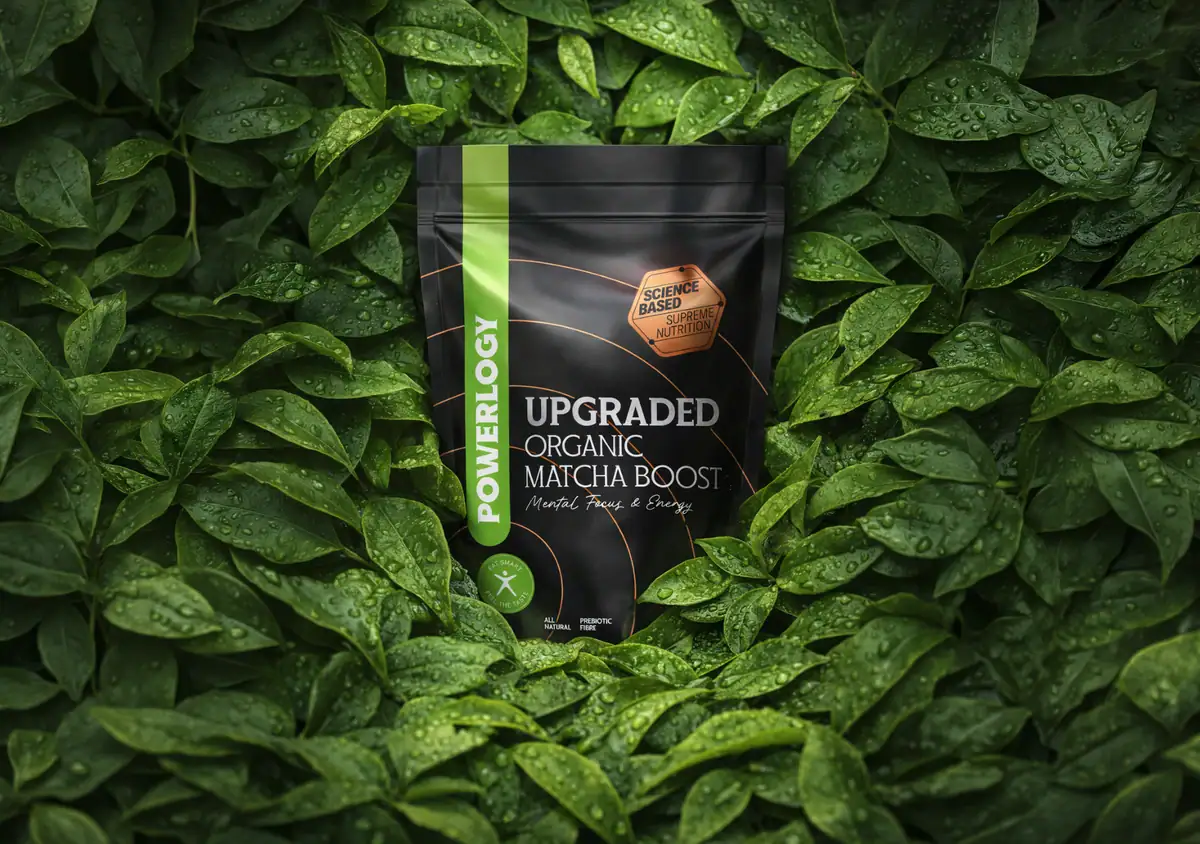
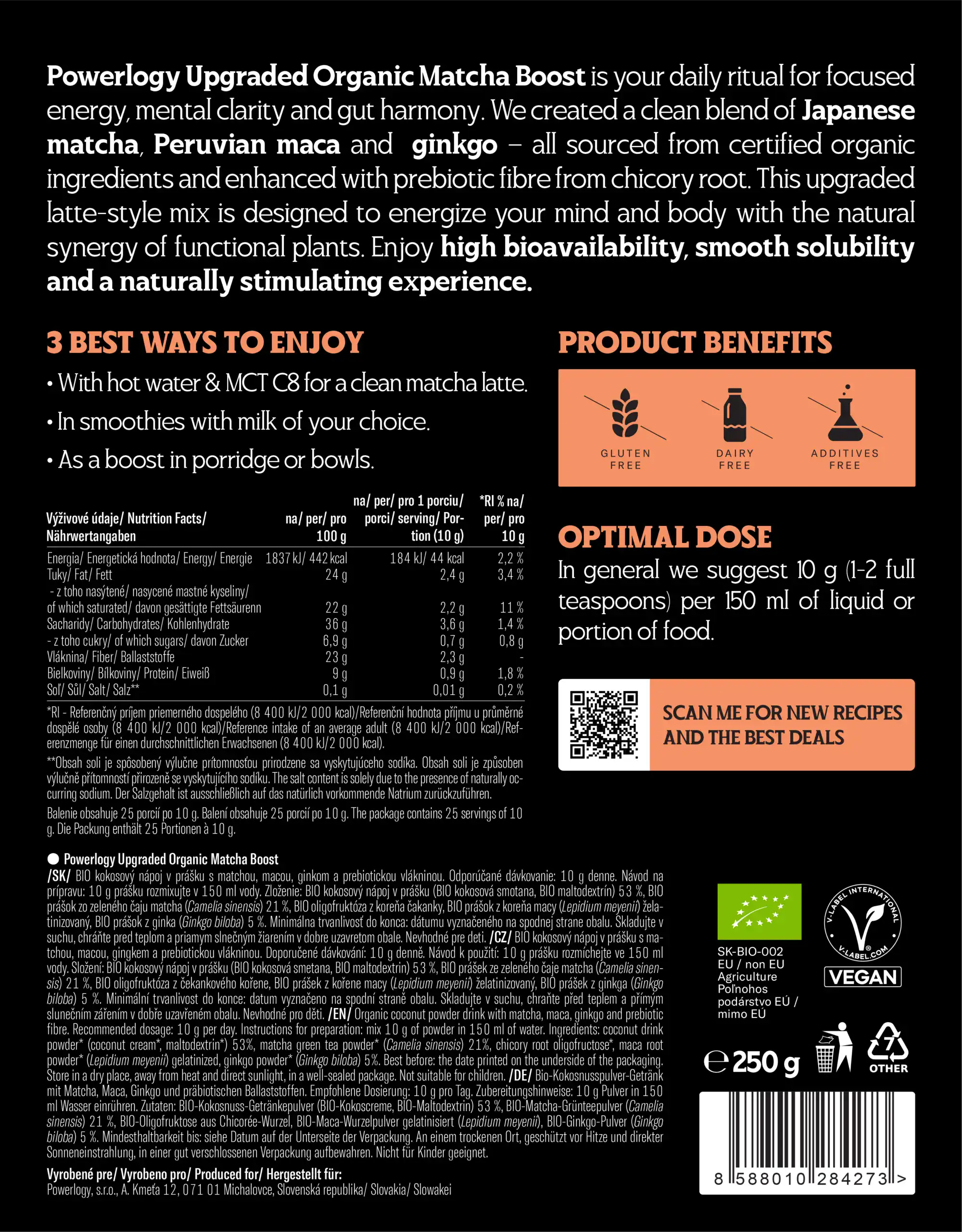
A delicious, natural alternative to coffee. We’ve created an innovative blend of BIO Japanese matcha with maca, ginkgo, coconut milk and prebiotic chicory fibre. Matcha contains L-theanine and polyphenols – a combination that promotes alertness and calm focus4 without the jitteriness typical of coffee.
EGCG and catechins in matcha contribute to protecting cells against oxidative stress,5 maca and ginkgo are traditionally used for energy and mental performance.6–7 Chicory fibre supports a healthy microbiome.1–3 Treat yourself to a wholesome drink with a gently creamy texture and a rich, vibrant green colour.
Ideal for

Built With Intent
Five functional ingredients in a thoughtfully crafted formula. Matcha delivers caffeine, L-theanine and catechins; maca and ginkgo are traditional adaptogens for energy and focus; coconut milk lends a gently creamy flavour; and chicory fibre nourishes the gut microbiome.
21 % of blend · L-theanine, EGCG, caffeine Ground green tea from shade-grown leaves, rich in L-theanine and catechins – promotes calm focus and protects cells against oxidative stress.4–5
53 % of blend · MCT and coconut cream Naturally light and creamy, with no added sugar required. MCT fats help stabilise the release of caffeine.
root · adaptogen A traditional Andean adaptogen used for centuries to support vitality, energy and physical performance.6
5 % of blend · leaves Traditionally used to support mental performance and concentration.7
prebiotic fibre Supports a healthy microbiome, feeds beneficial gut bacteria and contributes to better digestion.1–3
How does matcha work in the body?
Three mechanisms working simultaneously in a single serving — energy, focus and cellular protection.

Concentrated catechins in every serving
Catechins are powerful plant antioxidants that protect cells from oxidative stress and support heart health and metabolism. With matcha, you drink the whole ground leaf — not just a brew. That's why 10 g of Upgraded Matcha Boost contains many times more catechins than a regular cup of green tea or coffee.5,8

Matcha or coffee?
Both drinks energise, but they work differently. Matcha is for those who want calm energy without the jitters and the coffee crash.

How to prepare?
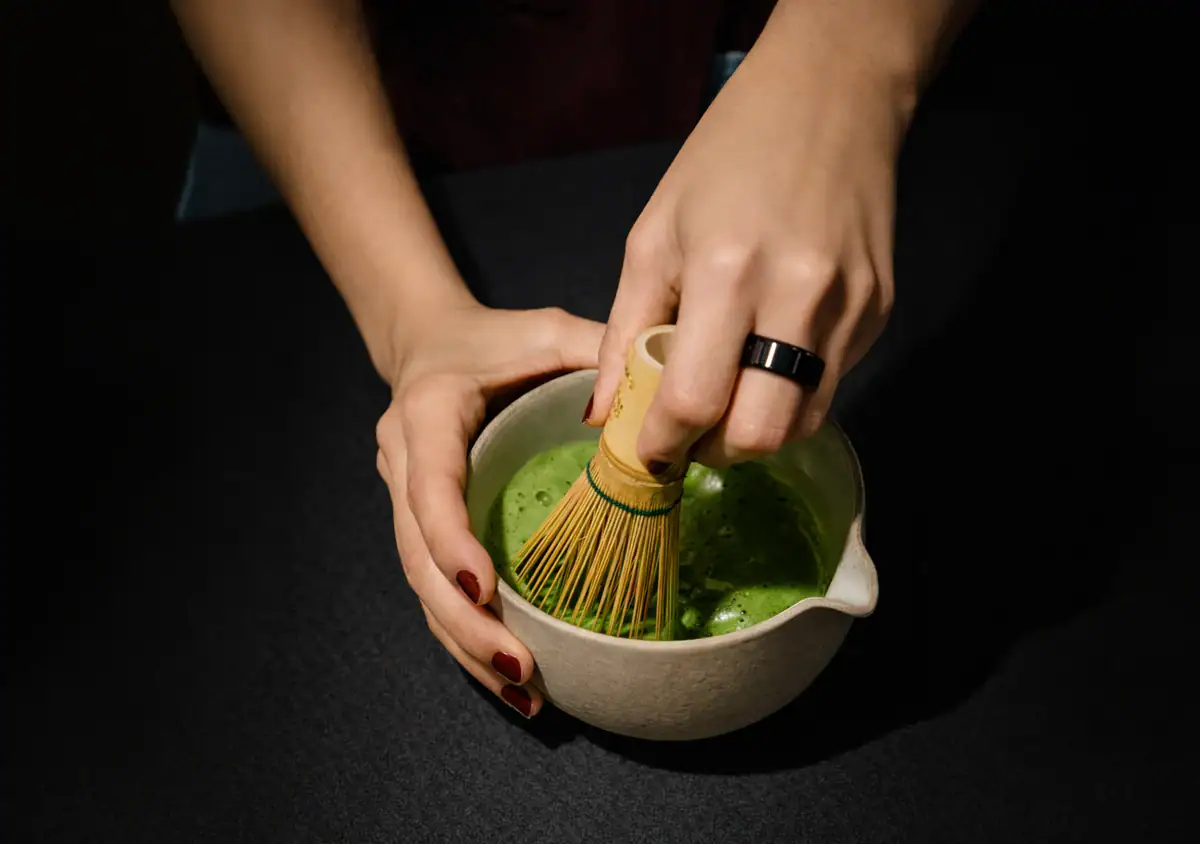
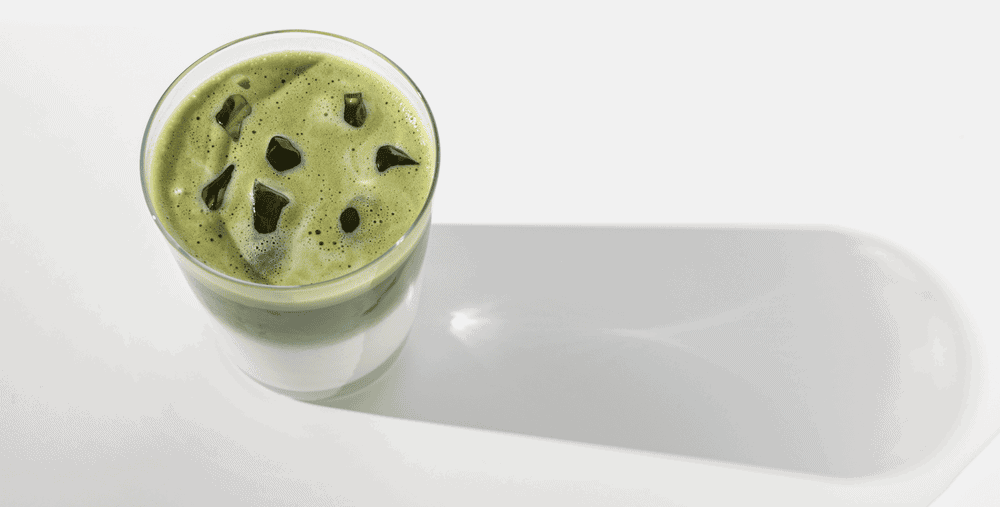
Mix 1 serving (10 g) into 200 ml of milk or water. Best enjoyed with plant-based milk (oat, almond, coconut) — the fats help slow the release of caffeine and prolong the feeling of steady energy.
Product details
- Dietary fibers reduce obesity-related disorders: mechanisms of action

- Microbiota responses to different prebiotics are conserved within individuals and associated with habitual fiber intake
- Back to the Roots: Revisiting the Use of the Fiber-Rich Cichorium intybus L. Taproots
- The combined effects of L-theanine and caffeine on cognitive performance and mood
- Health benefits of green tea catechins (EGCG)
- Maca (Lepidium meyenii): a review of its biological effects
- Ginkgo biloba extract and cognitive function in healthy adults
- Catechin contents of tea infusions and matcha: a comparative study
The science behind the Upgraded line
I created the Powerlogy Upgraded premium line for the most discerning customers, who demand the highest quality and efficacy. Upgraded products are enhanced with innovative ingredients such as MCT oil, prebiotic fibre, adaptogens and bioactive compounds.
I develop the formulas based on the latest scientific findings. I combine the effects of various ingredients to provide energy and support specific body functions – immunity, digestion, recovery, and physical and mental performance. I consult on the functional benefits with the scientific advisory board that we work closely with at Powerlogy.
I recommend Upgraded products as the solution for people who want a reliable source of energy and nutrition every day.
– Dušan Plichta, founder of Powerlogy and product creator

Frequently asked questions
One serving (10 g) contains approximately 70 mg of caffeine from matcha — comparable to a single espresso. Thanks to L-theanine, however, it is released more slowly and steadily, with no jitteriness or coffee 'crash'.
Yes, many people enjoy it as an afternoon pick-me-up. Thanks to its steadier caffeine release (compared to coffee), it is less disruptive to sleep. Sensitive individuals should consume it at least 6 hours before bedtime.
Yes, all ingredients are exclusively plant-based. We recommend oat, almond or coconut milk for preparation.
Milk softens the earthy taste of matcha and enhances the creaminess of the coconut component. The fats in milk also help slow the release of caffeine, extending the feeling of sustained energy.

Dušan Plichta
Founder of Powerlogy & developer of functional products for energy, performance and long-term health
Dušan Plichta
Founder of Powerlogy & developer of functional products for energy, performance and long-term health