Back to School -15 % with code ENERGY15

NoordCode Vegan Omega-3 Lemon

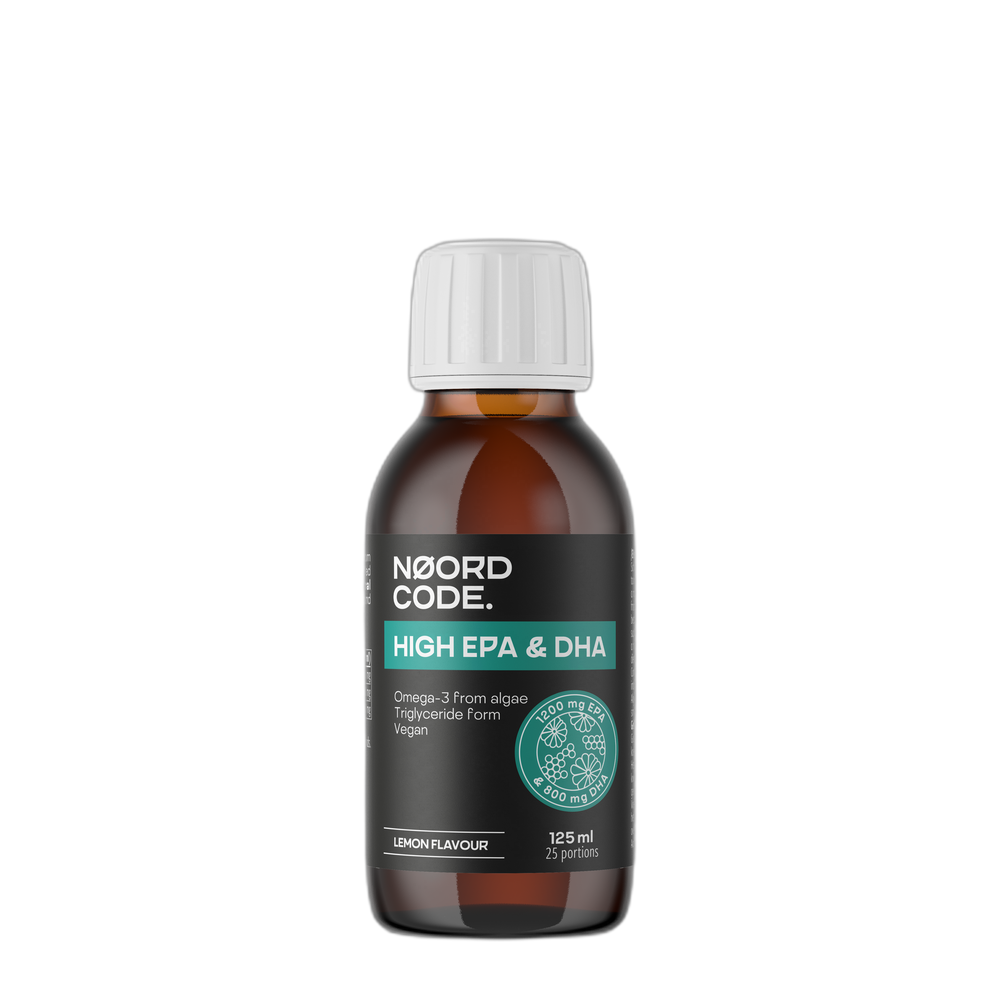
High-dose plant-based omega-3 from algae - 1200 mg EPA and 800 mg DHA in TG form, no fishy taste
This product is out of stock

We're sorry, this product is currently out of stock.

46,95  incl. tax 375,60 /l Lowest price in the last 30 days: 46,95 

The essentials in 20 seconds

A high-dose plant-based omega-3 oil from marine microalgae. One serving (1 teaspoon, 5 ml) delivers 2000 mg of omega-3 in the natural triglyceride (TG) form – of which 1200 mg EPA and 800 mg DHA. DHA contributes to the maintenance of normal vision and normal brain function, EPA and DHA contribute to the normal function of the heart.1

We source the oil directly from algae – the original source of EPA and DHA, without pressure on fish populations and without fishy aftertaste or burping. Thanks to low oxidation (TOTOX less than 5) it is fresh and protected by natural tocopherols. From the NoordCode brand, which is built on a clean plant-based formulation.

0 mg
omega-3 per serving
0 mg
EPA per serving
0 mg
DHA per serving
0
TOTOX (low oxidation)

Why omega-3 from algae?

Fish do not produce EPA and DHA themselves - they obtain them from algae, which are the original source of these fatty acids in the food chain. That is why we draw them directly from algae, without an intermediary.

1
Algae are the original source
Marine microalgae Schizochytrium sp. produce EPA and DHA directly. The oil from them bypasses the entire fish food chain.
2
Natural TG form
Omega-3 remain in the triglyceride form - without chemical concentration and without re-esterification, so the natural structure of the fatty acids is preserved.
3
Clean and sustainable
Controlled fermentation in closed tanks. Vegan, without pressure on fish populations and without fishy aftertaste or burping.

A formulation that makes sense

The base is an algae oil rich in EPA and DHA, supplemented with MCT oil from coconut as a carrier, Sicilian lemon oil for taste and natural tocopherols to protect against oxidation. No unnecessary additives, a clean plant-based profile.

EPA
1200 mg/serving
An omega-3 fatty acid that algae are naturally rich in. EPA and DHA contribute to the normal function of the heart (with an intake of 250 mg EPA + DHA per day).1
DHA
800 mg/serving
DHA contributes to the maintenance of normal vision and normal brain function (with an intake of 250 mg DHA per day).1 Maternal intake of DHA contributes to the normal brain and eye development of the foetus and breastfed infant.1
Algae oil
Schizochytrium sp., TG form
The main component of the formula. An oil rich in DHA and EPA from marine microalgae in the natural triglyceride form - without chemical concentration and without re-esterification. Our source: controlled fermentation of algae in closed tanks.
MCT oil
from coconut oil
Serves as a natural carrier of fatty acids and unifies the consistency of the oil. Our source: coconut oil.
Sicilian lemon oil
natural flavouring
Gives the oil a delicate lemon taste and masks the typical oily note. Thanks to its plant-based origin the oil has no fishy aftertaste. Our source: natural oil from Sicilian lemons.
Natural tocopherols
antioxidant
They protect the sensitive omega-3 fatty acids against oxidation and help keep the TOTOX value low (less than 5). Our source: a tocopherol-rich extract.
a high dose of EPA and DHA daily
vegans and a plant-based diet
those who cannot stand a fishy aftertaste
daily support for the heart and brain

How the oil is made

The journey from algae to oil is gentle and controlled. Without aggressive chemicals, with an emphasis on freshness and purity.

1
Algae cultivation
The microalgae grow in closed fermenters under controlled conditions.
2
Enzymatic extraction
The oil is obtained enzymatically, without aggressive chemicals.
3
Gentle refining
The oil is gently purified while preserving the natural structure of the fatty acids.
4
Stabilisation with tocopherols
Natural tocopherols protect the oil against oxidation.
5
Purity testing
Testing for heavy metals, dioxins and PCBs before filling.

Sicilian lemon

A delicate Sicilian lemon flavour, without fishy aftertaste and burping.

When and how to take it

The recommended daily serving is 1 teaspoon (5 ml), ideally with a meal. Shake the bottle before use. Once opened, consume within 6 weeks. A 125 ml pack lasts for 25 servings.

Step 1
Shake the bottle
Shake well before each use
Step 2
Measure out 5 ml
1 teaspoon per day
Step 3
Take with a meal
Ideally during a meal, daily

Product details

Volume 125 ml (25 servings × 5 ml)
Composition algae oil (oil rich in DHA and EPA from the microalgae Schizochytrium sp.), MCT oil (from coconut oil), flavouring: Sicilian lemon oil, antioxidant: tocopherol-rich extract. Food supplement. Category: fatty acids.
Made in Europe

Active ingredient Content in 5 ml
Omega-3 fatty acids (total) 2000 mg
- of which EPA (eicosapentaenoic acid) 1200 mg
- of which DHA (docosahexaenoic acid) 800 mg
Form natural triglycerides (TG)
Freshness (TOTOX) less than 5
The NRV for omega-3 is not established by EU regulation.

Each batch is independently tested for heavy metals, dioxins and PCBs. Low oxidation is confirmed by a TOTOX value of less than 5.

The 125 ml pack contains 25 servings (1 serving = 1 teaspoon / 5 ml).
Recommended dosage: 1 teaspoon (5 ml) per day, ideally with a meal. Shake the bottle before use.
Warnings: Do not exceed the recommended daily dose. The combined supplemental intake of EPA and DHA should not exceed 5 g per day. In case of a heart rhythm disorder (for example atrial fibrillation) or when taking blood-thinning medication, consult a doctor before use. Keep out of reach of children. A food supplement must not be used as a substitute for a varied diet.
Storage: Once opened, consume within 6 weeks. Store in a dry, cool place away from light. The oil may naturally become cloudy or settle - this does not affect its quality.

  1. Commission Regulation (EU) No 432/2012 establishing a list of permitted health claims made on foods. Approved claims: DHA contributes to the maintenance of normal vision (250 mg DHA per day); DHA contributes to maintenance of normal brain function (250 mg DHA per day); EPA and DHA contribute to the normal function of the heart (250 mg EPA and DHA per day); EPA and DHA contribute to the maintenance of normal blood triglyceride levels (2000 mg EPA and DHA per day); maternal intake of DHA contributes to the normal brain and eye development of the foetus and breastfed infant. Based on the scientific opinion of EFSA.

Frequently asked questions

Fish do not produce EPA and DHA themselves - they obtain them from algae. Algae oil therefore draws these fatty acids directly from the original source. It is vegan, sustainable, does not create pressure on fish populations and has no fishy aftertaste nor does it cause burping.

No. The oil is of plant origin, so it has no fishy aftertaste nor does it cause burping. The delicate lemon taste is given by Sicilian lemon oil, which masks the typical oily note. Low oxidation (TOTOX less than 5) and natural tocopherols keep the oil fresh.

Yes. EPA and DHA come from the marine microalgae Schizochytrium sp., not from fish. The formula is purely plant-based - algae oil, MCT oil from coconut, Sicilian lemon oil and a tocopherol-rich extract. Suitable for vegans and for those who avoid fish.

The triglyceride (TG) form is the natural form in which omega-3 occur in food. The ethyl ester form arises during chemical concentration and subsequent re-esterification. Our oil remains in the TG form - without chemical concentration, with the natural structure of the fatty acids preserved. A TOTOX of less than 5 additionally confirms the high freshness of the oil.

The recommended serving is 1 teaspoon (5 ml) per day with a meal, which delivers 2000 mg of omega-3 (1200 mg EPA and 800 mg DHA). The combined supplemental intake of EPA and DHA from all sources should not exceed 5 g per day. If you take blood-thinning medication or have a heart rhythm disorder (for example atrial fibrillation), consult a doctor before use.

Maternal intake of DHA contributes to the normal brain and eye development of the foetus and breastfed infant.1 However, pregnant and breastfeeding women should consult a doctor before use. A food supplement must not be used as a substitute for a varied diet.

Reviews

There are no reviews yet.

Cookies settings

We use cookies on our website. Some are necessary for the website to function properly, while others help us improve this website and your user experience. Thanks to them, we show you tailor-made offers and offer products that might interest you. However, we need your consent to use all cookies for this. You can read more about Cookies here.

Customize cookies preferences