
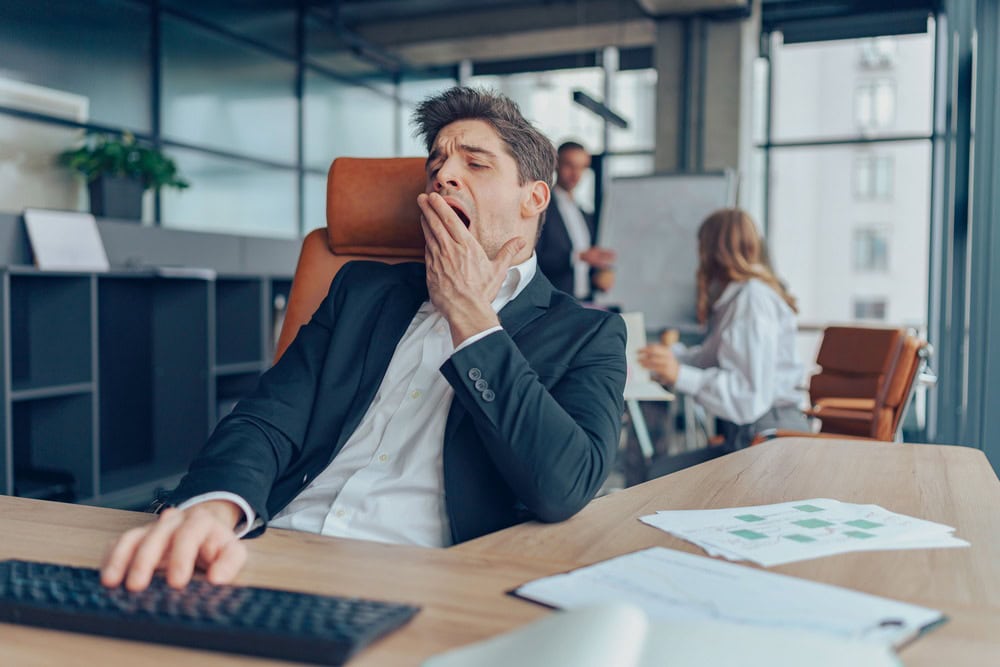
Our body works much like a battery – it spends energy on performance and refills it from key sources such as sleep, food and overall health. Physical and mental health are connected vessels. Looking after all of these areas is essential if we want to perform consistently.
Modern science shows that circadian rhythms, hormonal processes, food choices and the timing of coffee are closely linked to focus, productivity and mental well-being. If we ignore them, we face frequent fatigue, stress, procrastination, and even more serious problems such as anxiety or burnout.
In this article we will show you how to manage your energy better through the day and why it matters to know your own biological rhythm.
Circadian rhythms and cognitive function: how your biological engine works
What is a circadian rhythm?
The circadian rhythm of a human being is a natural 24-hour cycle that governs biological processes in the body including sleep, hormonal regulation and energy levels. It is driven by internal biological clocks, which influence:
- sleep patterns,
- hormonal regulation,
- metabolism and
- the overall energy level of the body.
This circadian cycle is shaped by the alternation of light and dark, which is why it has a key influence on our mental and physical performance during the day.
Circadian rhythms and diet have a significant influence on cognitive functions, which include:
- perception and attention,
- memory and learning,
- thinking, decision-making and language skills,
- awareness and the handling of information.
These mental skills are needed for every task, from the simplest to the most complex, and their efficiency changes through the day in line with biological rhythm and body temperature.
One of the most important hormones linked to the circadian rhythm is cortisol, which peaks shortly after waking and then declines naturally through the day. This hormone influences alertness, reaction time and the ability to concentrate. That is why the circadian rhythm of cortisol is an important factor when planning productive activities.
How do circadian rhythms affect performance during the day?
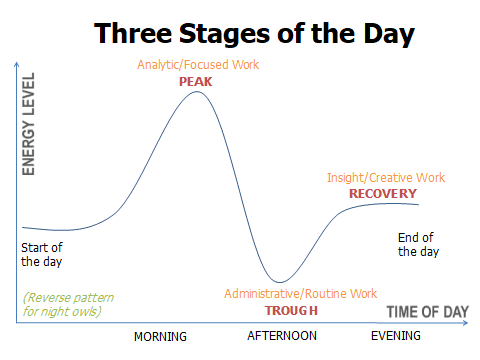
Circadian clocks guide when it is best to do certain kinds of task:
- Morning (9:00 – 12:00): Energy is at its highest, so this is the ideal time for analytical and demanding tasks such as planning, decision-making and problem solving.
- Afternoon (13:00 – 15:00): This is when sudden tiredness after eating and the afternoon dip arrive. Routine and administrative tasks are recommended.
- Evening (16:00 – 19:00): Energy recovers and creative thinking gains strength. An ideal time for brainstorming, creative briefs or strategic planning.
How to optimise your circadian rhythm
If you want to improve productivity and cognitive performance, it is recommended to:
- Keep a regular sleep schedule – go to bed and get up at the same time.
- Adjust your diet to your circadian rhythm – avoid high-sugar meals, especially in the afternoon.
- Make use of natural light – spend time in the sun in the morning and minimise blue light in the evening.
Circadian rhythms and diet are closely connected, since badly timed meals can disturb hormonal balance and cause sudden tiredness after eating or an afternoon slump.
Afternoon fatigue: how to avoid it and what to eat
Afternoon fatigue, or the sudden tiredness after a meal during the day, is often caused by food with a high glycaemic index. If you want to avoid the slump:
- Choose complex carbohydrates(quinoa, sweet potatoes) and proteins(chicken, tofu and other suitable protein sources).
- Eat small portions more often, so that you do not overeat. Ask for your restaurant lunch to be boxed up and finish it later.
- Avoid high-sugar foods, which cause a rapid drop in energy.
- Make sure you get enough fibre and healthy fats(avocado, nuts, vegetables).
- Keep your blood sugar stable: Avoid foods with a high glycaemic index and focus on foods rich in fibre and healthy fats. Prefer the fructose in fruit, which also contains antioxidants and polyphenols.
- Look after your gut microflora: Add superfoods to your diet, or a blend of seven green superfoods.
- Hydration: Drink 0.5 l of fluid a day for every 15 kg of body weight (if you weigh 80 kg, you should drink 2.5 l).
The afternoon slump is not only about food – it is closely linked to the circadian rhythm too. After lunch, alertness naturally drops as the body tries to restore energy for the second half of the day.
Many people therefore reach for coffee, but that is not always the right answer. If you feel very tired after eating, try a short walk, deep breathing or a glass of water – sometimes the tiredness is caused by dehydration.

Coffee: helper or enemy of concentration?
Is coffee harmful? How and when to drink coffee “safely”?
Coffee can be a great help if you drink it at the right time and in the right way.
- Morning (9:30 – 11:00): Do not drink coffee sooner than 40 minutes after waking. Coffee is heavy on the stomach, so it is a good idea to take in some healthy fats(a teaspoon of ghee butter, MCT oil, milk protein, …). That way you avoid the energy dip as the caffeine wears off.
After waking, the human body has its highest levels of the stress hormone cortisol, which is why you almost certainly know the pairing of coffee and anxiety, or coffee and jitters. Those of you who are more sensitive should therefore be careful. For the last ten years, modern managers who “work with their heads” have been drinking coffee with coconut MCT oil instead of a classic breakfast. - Afternoon (13:00 – 14:30): One cup can help you get through the afternoon dip.
How long does coffee work?
Usually 3 – 5 hours, so avoid drinking it after 17:00, so that you do not disturb your sleep.
Is coffee healthy? How many coffees a day is it sensible to drink?
An espresso made from speciality coffee contains antioxidants. The same does not apply to the over-roasted beans typically sold in discount supermarkets. Those are more likely to leave you jittery. The usual advice is to stay under roughly 400 milligrams of caffeine a day (3 – 4 cups). We also recommend experimenting with alternative sources of caffeine, such as green tea, maté or matcha. They contain less caffeine and the body absorbs it more slowly, so they provide longer-lasting energy.

Tip: Add healthy fats to your coffee (ghee butter, MCT oil) to soften both the rush and the wearing off of the caffeine.
Can coffee cause anxiety or jitters?
Caffeine affects the nervous system through several mechanisms:
Stimulation of the nervous system
- Caffeine blocks adenosine, a neurotransmitter that brings on tiredness and relaxation. As a result alertness rises, but so do tension and jitters.
- It also stimulates the production of adrenaline – a stress hormone that prepares the body for “fight or flight”. That can lead to a faster heart rate, restlessness and a feeling of anxiety.
Disruption of neurotransmitter balance
- Caffeine affects dopamine and serotonin, which regulate mood. Excessive consumption can cause mood swings, irritability and a reduced ability to cope with stress.
Effect on cortisol levels
- Caffeine increases the production of cortisol, a stress hormone. Chronically high cortisol is associated with anxiety, tension and exhaustion.
Higher heart rate and blood pressure
- Caffeine stimulates heart activity and can cause palpitations, which the body may misread as an anxiety response.
Disturbed sleep
- Caffeine has a long half-life (5-6 hours), which means its effects can last long after you drink it. If you drink it late in the afternoon or in the evening, it can worsen sleep quality, which in turn contributes to more irritability and anxiety the following day.
Individual sensitivity to caffeine
- Some people have a genetically lower tolerance to caffeine, which means that even a small amount can cause jitters, shaky hands or panicky feelings.
How to set up an optimal routine for higher performance
Well-planned breaks can noticeably increase productivity:
- The Pomodoro technique: Work for 25 minutes, then take a 5-minute break.
- Longer breaks: After 90 minutes of intense work, give yourself 15 to 20 minutes of rest.
- Use your breaks actively: A short walk, stretching or meditation will help you restore both mind and body.
- Keep a regular sleep schedule – a stable circadian rhythm improves productivity.
- Take your chronotype into account – early birds and night owls have different performance cycles.
- Minimise blue light in the evening – you will support melatonin production and good sleep.
Managing your energy well through the day is the key to high performance and mental well-being. Watch the signals your body sends, eat sensibly and plan your tasks around your circadian rhythm. Do not forget breaks and enough sleep – your “battery” will thank you with higher productivity and greater satisfaction.


Comments
There are no comments yet.