
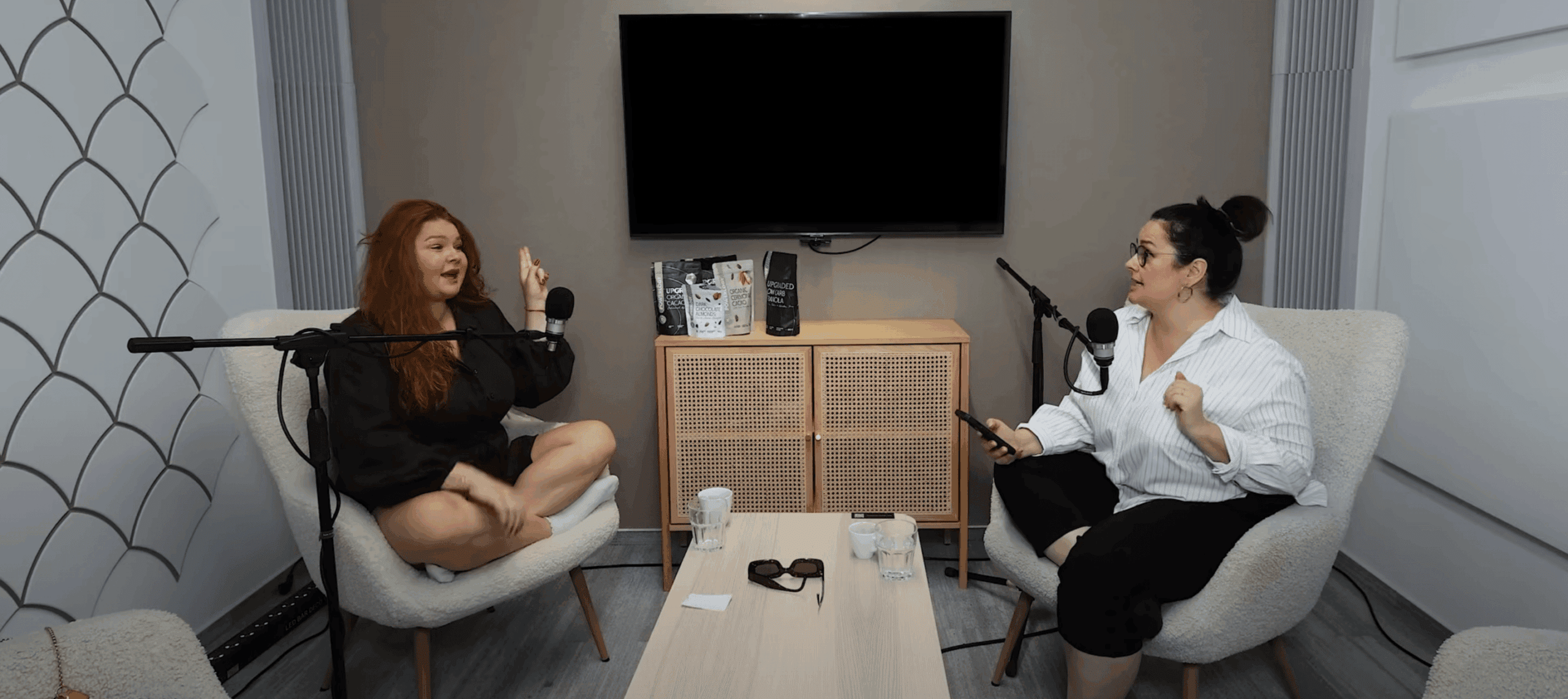

I’ll do it in 2 weeks.” “I can still make it.” Sound familiar? In a conversation with Evelyn (Eva Kramerová) and Peťa Polnišová (full of humour and honesty) all the classics came up: crash diets, sweat wraps, rice cures, miracle pills, liposuction and fasting well beyond reason. And along with them, the essentials: extremes do not work, the body should be listened to rather than punished, and what works best are small, sustainable habits such as good food, fewer ultra-processed foods, movement for the joy of it and a bit of mental hygiene.
6 key takeaways
- “Swimsuit weight loss” is a mental hack, not a solution
Short windows, 8-week challenges and “I can still make it” calculators end in the yo-yo effect. A lasting result comes from changing habits, not from a sprint before the holiday. - Food and mind: you feel the connection fast
Cutting back on sugar and UPF improved energy and migraines (a personal experience shared in the conversation). Comfort food and stress, on the other hand, bring a worse mood, more anxiety and less motivation to move. - Extremes do more harm than good
Training in a sweat wrap, one-sided diets, miracle eggs, injections or 23:1 fasts without supervision. The result is a short drop in weight, then a long stretch of trouble with metabolism, mood and food. - The body needs to be listened to again
Many of us spent years learning to suppress or ignore hunger. The goal is to come back to the body’s signals (hunger/fullness), to eat consciously and not to compensate for emotions with a plate of food. - Social media is not reality
Comparison feeds anxiety. Even “perfect” bodies have their own struggles. It makes more sense to work on your own energy, sleep and mood than on other people’s feeds. - Self-love is not an excuse, it is the starting point
“Liking yourself” does not mean giving up. It means making choices towards yourself that are kind and at the same time smart: real food, regular movement, minimal UPF and gradual discipline.
What (not) to do any more: red flags
- Crash diets, magazine detoxes, nothing but rice/whipped cream/ice cream.
- Sweat wraps and other sweaty “shortcuts”.
- “Miracle” pills/injections without a doctor.
- Fasts with extreme ratios, without preparation or supervision.
- Punishing yourself for food, panicking over the kilos before a deadline.
What works: a small plan, a big effect
- Food
- Short labels: real foods you know from your own kitchen.
- Less UPF: cut down sharply on sweet drinks, quick bakery goods and snacks.
- More fibre: vegetables, fruit, pulses, wholegrains, the goal is ~30 g/day.
- Order on the plate: salad/ vegetables + fat first (olive oil), then the side dish.
- Eat slowly: the fullness signal runs 10-20 minutes behind.
- Head
- A 2×2-minute micro-habit each day: a short body scan in the morning and after work, without your phone.
- Mental hygiene: when food is more emotion than hunger, deal with the cause, not with the fridge.
- Movement
- Joy > performance: a 10-20 minute walk after a meal, running/swimming in a way you actually enjoy.
- Consistency: better 90 % of days that are “good enough” than 10 % of days that are “perfect”.
Powerlogy tips (practical and without extremes)
- Coffee with MCT in the morning is a favourite of many people who find it helps them stay focused.
- Good-quality protein after training (cacao, whey/collagen) – protein contributes to the growth and maintenance of muscle mass and helps you feel satisfied.
- Nuts, 85-90 % chocolate, ghee, extra virgin olive oil – clean fats with short labels, for the kitchen and for the road.
- Sweet smart: if you have cake, have it consciously, or bake it “Powerlogy style” without refined sugar.
Mini FAQ from the episode
“Fasting helped me with migraines, but 23:1 is a lot. What should I do?”
A gentler, planned routine makes sense (for example a 12-14 hour overnight break) with good food inside the window. No extremes, especially if you have a lot of stress, a lot of training or health issues.
“How do I stop eating from emotion?“
A short check-in before eating: Am I hungry, or tired/stressed? If it is emotion, give it a 10-minute pause (water, a short walk) and only then decide.
“I want to put on a swimsuit in a month, what is realistic?“
Focus on how you feel (a lighter stomach, better sleep, steady energy), not on a number. After 2-3 weeks of consistency you will see it in the mirror and in your head.
Safety note
Fasting, injectable products and major dietary changes belong in the hands of a professional.
If you have migraines, digestive trouble, an eating disorder or you take medication, discuss any changes with your doctor.
The point, in the end
No sweat wrap and no miracle. Good food, calm at the table, a bit of movement and kindness towards yourself every day. Swimsuits come and go. Energy, sleep and mood stay with you all year round.
If this article interested you and you want to hear more on the topic, listen to the whole episode of the Powerlogy podcast on Spotify or YouTube.


Comments
There are no comments yet.