
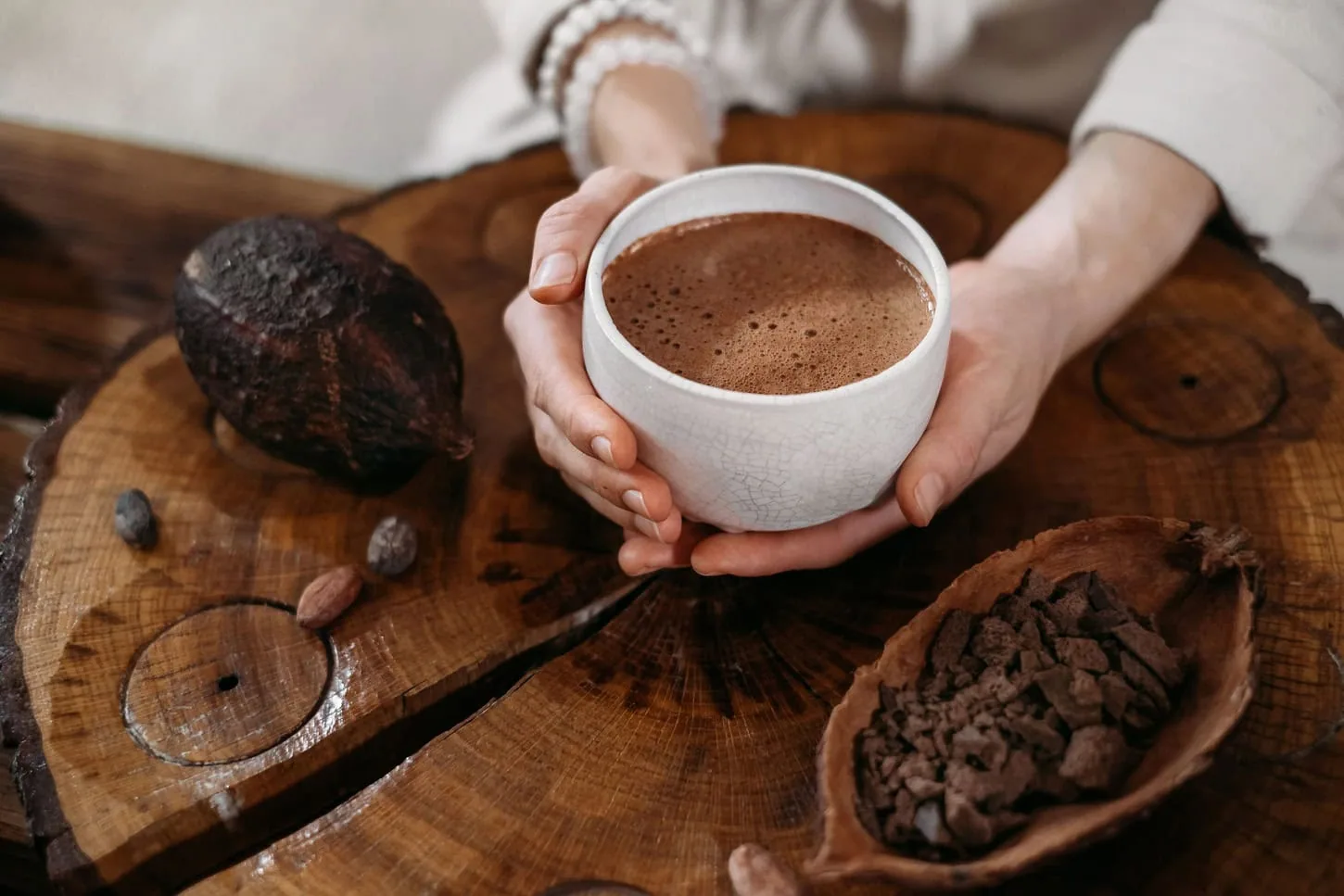
Have you ever heard the term ceremonial cacao or ritual cacao? And do you know where that grand name comes from?
Ceremonial cacao belongs among the superfoods that should not be missing from any health-minded household. It comes from transparent farms and has a rich history, because ancient civilisations used it in all kinds of rituals. What is its history, how is it made, what is it valued for and why should you have it at home too? You will find all of that in this article.
The history of ceremonial cacao
The origins of ceremonial cacao are linked to the ancient Maya and Aztec civilisations, who used it in various rituals (ceremonies) because they believed it held sacred power. They credited it with healing and transformative powers and called it the sacred drink of the gods. Cacao was a very valuable commodity in these cultures, it was even used as one of the luxury currencies and it was part of all the great life events of these civilisations. That is also why the finest cacao comes from countries such as Ecuador, Peru, Colombia and Guatemala.

How is ceremonial cacao made?
After harvest the cacao pods are opened and the white pulp (the cacao beans) is left to ferment for a few days. During this natural process the flavour of the beans changes from a strong bitter-sour one to a pronounced chocolate one. During fermentation the polyphenols oxidise, which shapes the flavour properties of the cacao.
The beans are then washed, left to dry in the sun and lightly roasted so that as much as possible of their valuable content is retained. And what if the target ingredient is raw cacao? Then roasting is skipped entirely and the temperature of both fermentation and drying is controlled – it must not exceed 45 °C.
The fermented, lightly roasted beans are then ground for several days between granite stones (roughly 1 – 3 days, depending on the result you want). Once ground, the resulting paste is left to set and that is that! This is why you will never buy true ceremonial cacao as a powder, but as chunks or grated shavings.
As you can see for yourself, the process of making ceremonial cacao is a very natural one – nothing is taken out of the cacao along the way and nothing is added to it. The result is a pure, 100 % natural product.
Differences between ceremonial and ordinary cacao
If you often buy ordinary shop cacao at home because you believe that this cacao is the healthy option, that may not always be the case. Ordinary powdered cacao is made using processes that strip valuable substances out of the cacao, and the result is often just a powder that tastes good but brings little else. So what are the differences between ritual and ordinary cacao?
- Different processing: ceremonial cacao is processed minimally, gently and at low temperatures. Ordinary cacao tends to be heavily roasted and the cocoa butter is removed during production.
- Different composition: ceremonial cacao is 100 % cacao mass including the cocoa butter, while ordinary cacao is a powder, defatted and often with various additives.
- Nutrient content: ceremonial cacao keeps all its vitamins, minerals and fats, whereas ordinary cacao loses part of its nutrients because of the way it is processed.
- Different taste: ritual cacao tastes intense, earthy, bitter and naturally creamy. Ordinary cacao is less bitter, but also less aromatic.
- The experience: ritual cacao is traditionally drunk as a moment of focus and calm, while ordinary cacao is more about taste and nutrition.

Ceremonial cacao – what it has to offer
If you treat yourself to genuinely good ceremonial cacao (such as ours – Powerlogy Organic Ceremonial Cacao), you will taste the difference. This superfood is rich in antioxidants, specifically flavonoids. Cocoa flavanols are a well-studied group of plant compounds, and research has looked at their association with blood flow and blood pressure.
Cacao is a wonderful thing to sit down with for a few quiet minutes of your day. It contains theobromine, which acts in a similar way to caffeine, but comes on far more gently and is kinder to the body. It also contains plenty of fibre. And what about cacao and calories? 100 g of our cacao contains 630 calories, so one serving contains around 157 calories.
Ceremonial cacao is a pleasant companion at work too – many people drink it as a mindful pause or before meditation. So many good things in such a tasty superfood – you can probably see by now why it has been loved for hundreds of years.
Does cacao have side effects?
Like any purely natural food, ceremonial cacao brings certain “risks” too. Here too, too much of anything is not a good thing, so it is wise to enjoy it in moderation. Start with a smaller amount and see for yourself what your body has to say about it.
Ceremonial cacao may not suit people with low blood pressure, people sensitive to stimulants (theobromine) and people with a more sensitive digestion (because of its higher fibre content). It may interact with blood-pressure medication, antidepressants and blood-thinning medicines.
Cacao in pregnancy – yes or no?
Many mothers-to-be ask the question: is cacao a good idea in pregnancy? In reasonable amounts, good-quality, non-alkalised cacao can be part of a varied diet. It contains antioxidants, magnesium, iron and fats. However, because of its theobromine content and its small amount of caffeine, pregnant women should be careful with quantities – the usual advice is not to exceed 30 g of pure cacao a day. If in doubt, ask your doctor or midwife.
Cacao before bed – yes or no?
While some people say that cacao before bed helps them relax, for others the mild stimulant effect of theobromine can disturb sleep. It depends on individual sensitivity. If you have trouble sleeping, try drinking cacao in the morning or the early afternoon instead.
Is ceremonial cacao suitable for children?
100 % cacao is generally not the most suitable drink for children. Ceremonial cacao contains the stimulant theobromine, so it is not recommended for children under 3; older children can try a milder “cocoa drink” with a lower cacao concentration. For a hyperactive child it is better to avoid it entirely, as it may affect their attention.
How to choose genuinely good cacao
Choosing a good cacao does not have to be a puzzle – just follow our tips! Go through all of the points below, because only then will you be sure of a ceremonial cacao that is worth drinking:
- country of origin: the best cacao comes from countries where it has a long tradition
and where it is grown sustainably: Peru, Guatemala, Ecuador, Mexico, Colombia… - processing: minimally processed cacao is best – fermented, sun-dried and ground into a fine cacao paste, ideally unroasted and non-alkalised cacao,
- quality certification: reach for cacao labelled organic, direct trade or fairtrade – that way you support sustainable cacao production and fair pay for farmers,
- look and smell: good cacao is oily, glossy and dark, with an intense earthy aroma and undertones of nuts or fruit,
- composition: real cacao has a very simple composition – just 100 % pure cacao!
If you want to be really sure of the quality, reach for the cacao from our e-shop.
Bonus: how to prepare ceremonial cacao
Now you know why ceremonial cacao is such a treat for your taste buds! So how do you make the very best cacao?
Preparing our ceremonial cacao is not difficult at all. Try our simple recipe! Stir 3 – 4 pieces of cacao (about 15 – 20 grams) into 200 ml of hot water or plant milk. Take care that the water / milk is not boiling, because high temperatures can destroy the valuable compounds in the cacao. Since the cacao is unsweetened, you can add a little cane or coconut sugar to sweeten it. A hand or electric whisk (the kind used for frothing milk) will help it mix better.
If you like unusual flavours, add a little of your favourite spice to the cacao. There are no limits to your imagination.
- Cacao with water: The purest form, which lets the flavour of the cacao come fully into its own.
- Cacao in milk: Excellent with almond, oat or coconut milk.
- Cacao in coffee: Add a pinch of cacao to your morning coffee and create your own “mocha” ritual.
Ceremonial cacao is a wonderful superfood with a great, unmistakable taste. You will see – after the very first taste you will look forward to it every day.


Comments
There are no comments yet.