
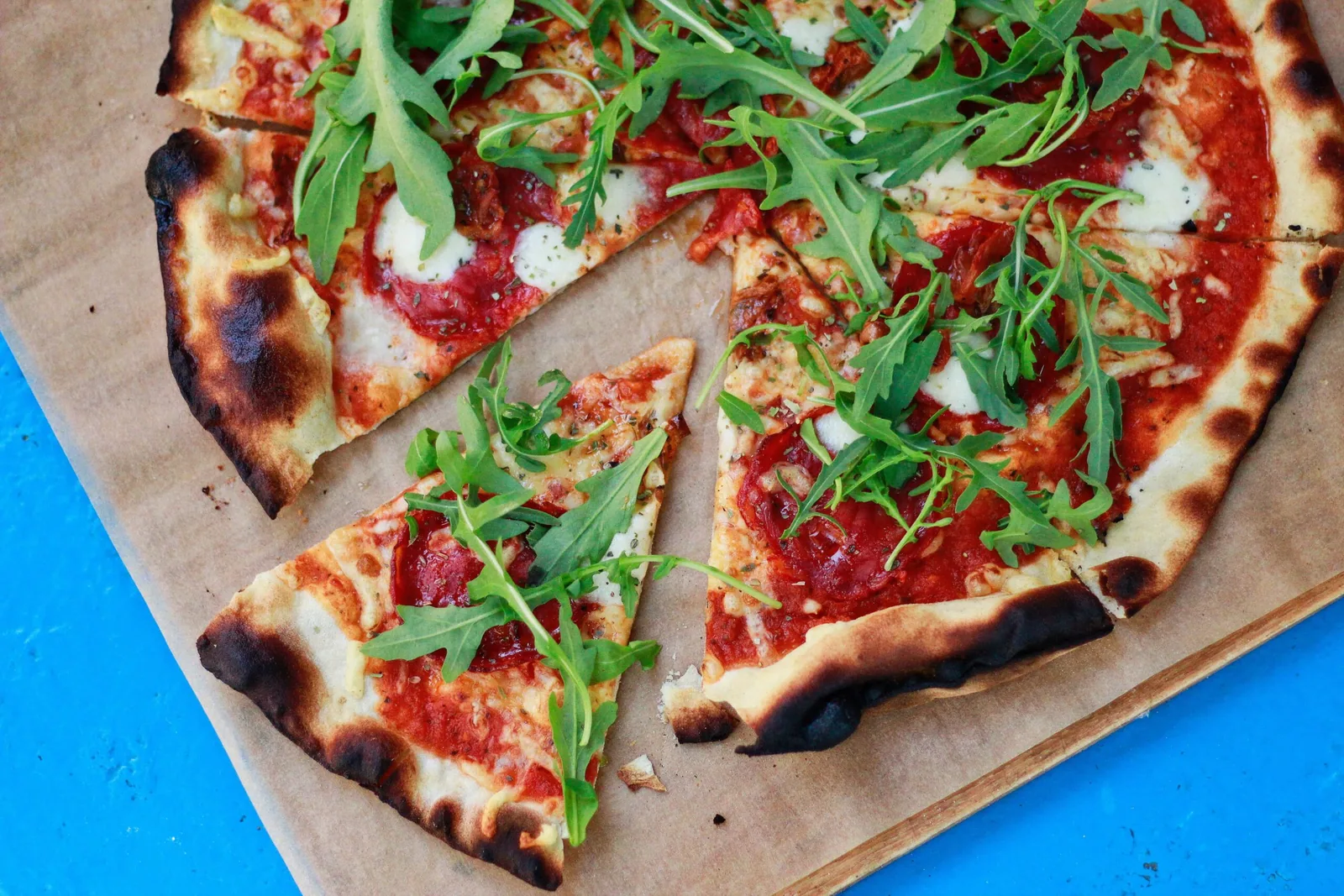
Why do we like pizza so much? Can I have it every week? Did you know there is such a thing as a pizza effect, and that it is worth watching out for? Can you no longer remember the taste of pizza because you cannot have gluten or grains? Can pizza be made in a healthier way too? Is there really a good pizzeria somewhere near Bratislava?
In this article we will bite into this Italian treat together, and with a minimal metabolic load!
Shall we go for pizza?
It is Friday evening, the weekend has finally arrived. You do not even want to think about cooking; on the contrary, you want to go out to eat. No salad, you want to treat yourself after a hard week. Something filling, tasty, with friends or family. Something everyone likes. It is obvious! We are going for PIZZA! The real Italian kind. Crisp thin dough, a delicious tomato base, prosciutto, mozzarella, maybe mushrooms or olives. Yum! With a nice wine on the side and we have a pleasant evening. We all enjoyed it…BUT…some of us now feel heavy, we have bloated stomachs and want to drink at least two litres of water. After dinner we are just puffing, we do not even want to move, we are calling a taxi home…
Does that sound familiar? Why must we feel heavy after such a perfect evening? Where did that energy go? After all, we have eaten, we should be full of strength…
Have you heard of the “pizza effect”?
There are several terms like this, but what matters to us now is its metabolic meaning, which has exactly the symptoms described above: slowed digestion, heaviness, gas, lethargy, yawning, tiredness, sluggishness, thirst and so on. The thing that after a hearty meal literally floors us, so that we do not feel like ourselves for several days. And all of that is only the outward sign; inside, the cells are working at full tilt to process this load.
If you treat yourself to such a “food trip” more often, it will also show in the amount of stored fat (mainly around the waist) and in your performance. Repeating this pattern often is also discussed in connection with inflammation and insulin resistance in the body.
And it does not only concern pizza, but also other popular modern “treats” — various desserts, cakes and creamy cupcakes from cafés, flavoured cream ice creams, and Chinese, Vietnamese and Italian fast-food-style dishes.
When you eat this kind of food, you deliver a large dose of carbohydrates and fats to the body at once. That is why the body asks for these foods so much and why a genuine dependence on them develops. It is a kind of “trap” of nature, which in prehistoric times saved lives. The combination of fats and carbohydrates is calorie-dense, it fills you up and it lays down stores for worse times. In a period when food was hard to come by, it was an enormous advantage. In the period of food abundance we live in now, however, that frequent combination is a hazard.
Fat slows the absorption of carbohydrates, so there is no immediate rise in blood glucose. That effect comes later, after the fat has been digested (easily even two hours after the meal), and it persists for many hours. So, in short, the “pizza effect” knocks out your productivity and vitality for several days.

It is not a 100 % valid law, it does not have to happen every time, and there are types of people who never experience it at all. Since our body takes longer to recover from it than from one night of partying, it is better to keep these foods to a minimum and, alongside that, to train your metabolism. Skipping breakfast now and then and fasting a little, cold exposure, high-intensity interval and strength training — all of that will help you handle the occasional “feast” better.
Pizza from the point of view of functional medicine
Experts in functional medicine are not enthusiastic about classic pizza either. The naturopath Katarína Tóthová ( Online Nutrition Coach at Nutriwellness – Naturopathic Nutrition Therapy ) is clear about it: ”From a nutritional point of view, classic pizza is roughly where a plain open sandwich is, but times 6! So it is a pro-inflammatory and potentially allergenic food. It is wheat flour covered with miserable pieces of vegetable, questionable cheese and occasionally some cured meat. On top of that it tends to be badly chewed and most people simply gulp it down, especially when they are not sitting comfortably at a restaurant table but in front of a screen on the sofa.
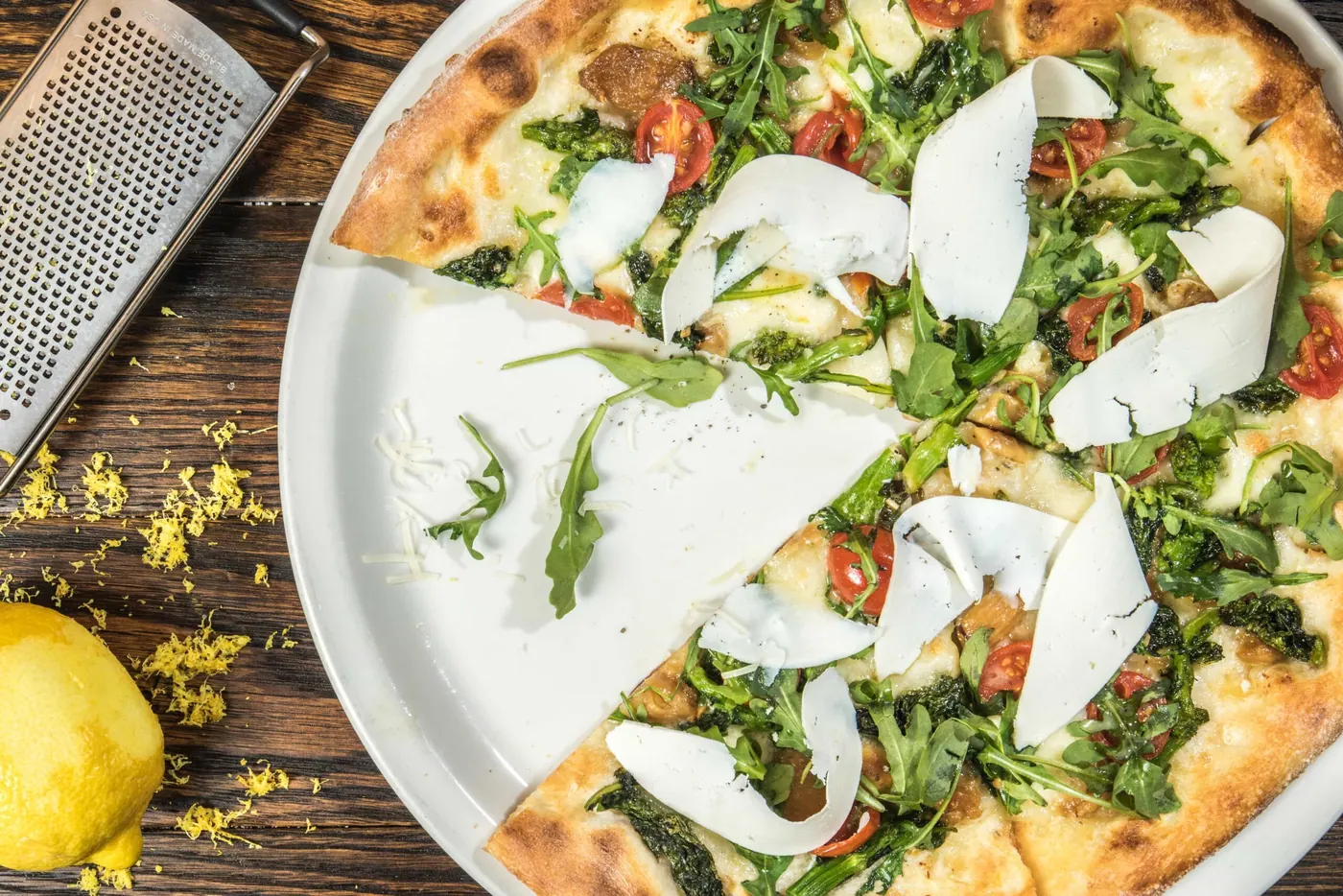
Alternative pizza, however, can be something completely different. When we swap white wheat flour for less pro-inflammatory ingredients (for example buckwheat, oats, seeds, paleo flour or even vegetables) and put as much vegetable on such a base as will fit, it will be a completely different dish! We can still sprinkle it with a good cheese, or for example bryndza, or drizzle it with virgin oil… Just before the end of baking, add a proper handful of wild rocket instead of 10 sad leaves…
In case of any allergy or intolerance to wheat, gluten, lactose and casein, pizza is completely off limits for you!”
Not all pizza is the same…or what are the more suitable alternatives?
We are gourmets and we do not like giving up tasty food. It is all about the right choice, the combination of ingredients and replacing the components that do not suit us. This is how we can conjure up a pizza we can treat ourselves to more often, without the body needing three days to recover.
1. Cauliflower base
Cauliflower is a vegetable that is not very rich in flavour on its own. That is why, after baking, it makes the perfect base for all the ingredients a pizza should have.
Ingredients:
- 1 cup lightly cooked cauliflower
- 1 cup grated mozzarella
- 1 egg
- 1 tsp dried oregano
- 1/2 tsp crushed garlic
- salt
- olive oil
Method:
- Clean the cauliflower, cut it into smaller pieces and cook it lightly. It has to keep a little firmness. Grate it or blend it in a food processor.
- Preheat the oven to about 230 °C
- In a bowl mix 1 cup of crushed cauliflower (you can freeze the rest for worse times), the egg and the mozzarella. Add the oregano, garlic and salt and mix thoroughly.
- Line a smaller baking tray with baking paper and transfer the “dough” onto it, then sprinkle it with olive oil.
- Bake for about 15 minutes.
- Layer the ingredients you like onto the baked pizza base. Remember that anything needing to be cooked has to be cooked in advance, because a pizza prepared this way only goes into the cooling oven for a moment so that the added cheese melts and all the flavours come together.
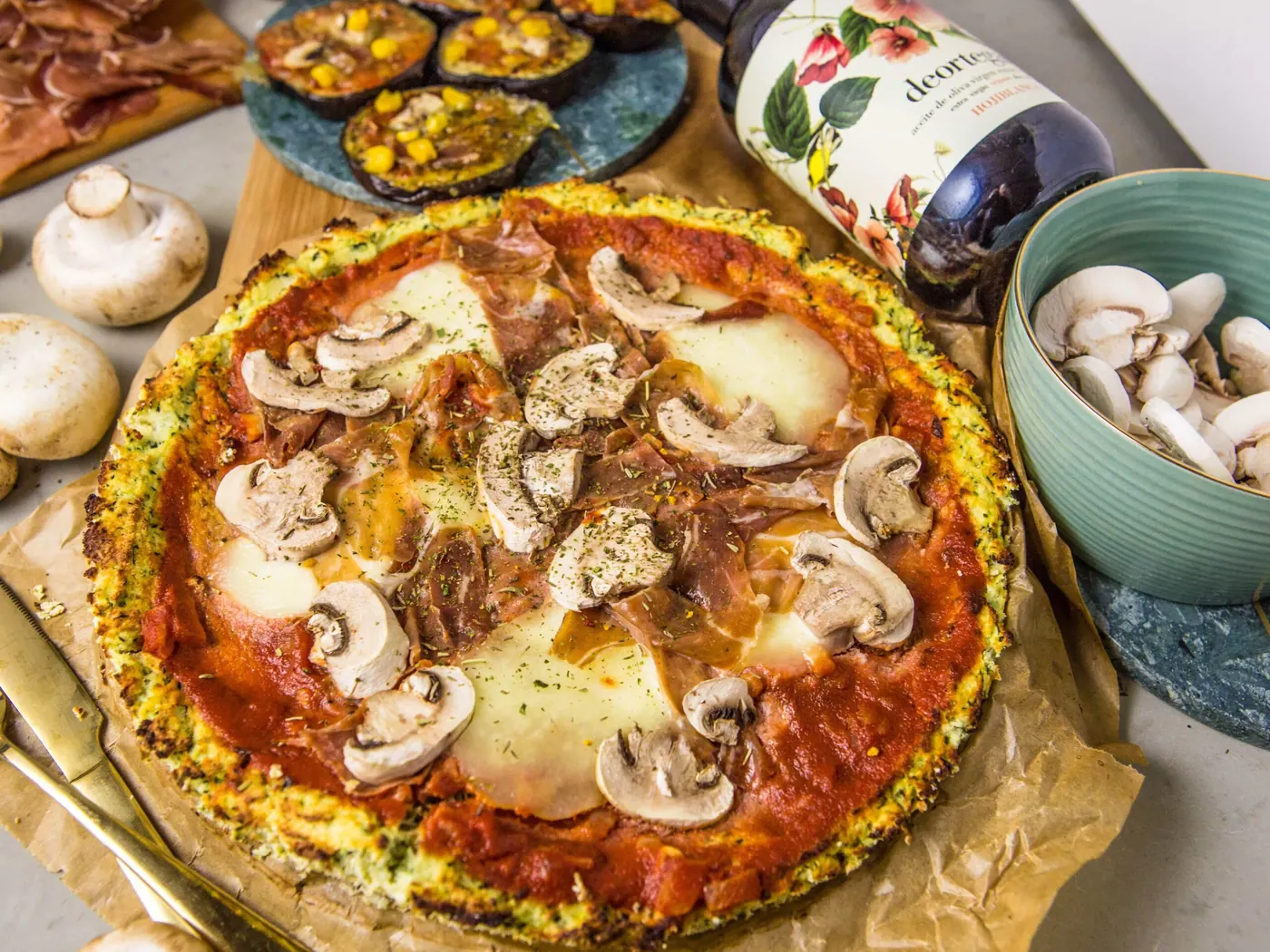
We will not lie to you: of course the taste is not the same as with a classic flour base. But neither is it like munching cauliflower. Probably none of your friends would guess that this ingredient was the base of the dough!
Tip: We recommend eating it with cutlery; with your hands it is a bit more of a challenge.
Tip 2: Instead of cauliflower you can also use courgette, and if you do not mind the stronger taste of broccoli, do not hesitate!
2. Aubergine base
The ideal recipe for entertaining visitors or for home-made celebrations. Mini aubergine pizzas are tasty, easy to make and children love them too! If this vegetable has not been your favourite so far, it will become a regular part of your shopping basket.
Ingredients:
- 1 large aubergine, cut into thicker slices
- basil, oregano, black pepper
- salt
- olive oil
Method:
- Salt the aubergine slices lightly and lay them on kitchen paper. Leave them for 20 minutes so that they release excess water.
- Sprinkle with oil, pepper and herbs; anyone who wants can add more salt
- Preheat the oven to 200 °C
- Bake for 15–20 minutes, until the aubergine softens. It must not fall apart completely
- Lay the ingredients you like on the pre-baked “base” and bake for another 5 minutes.
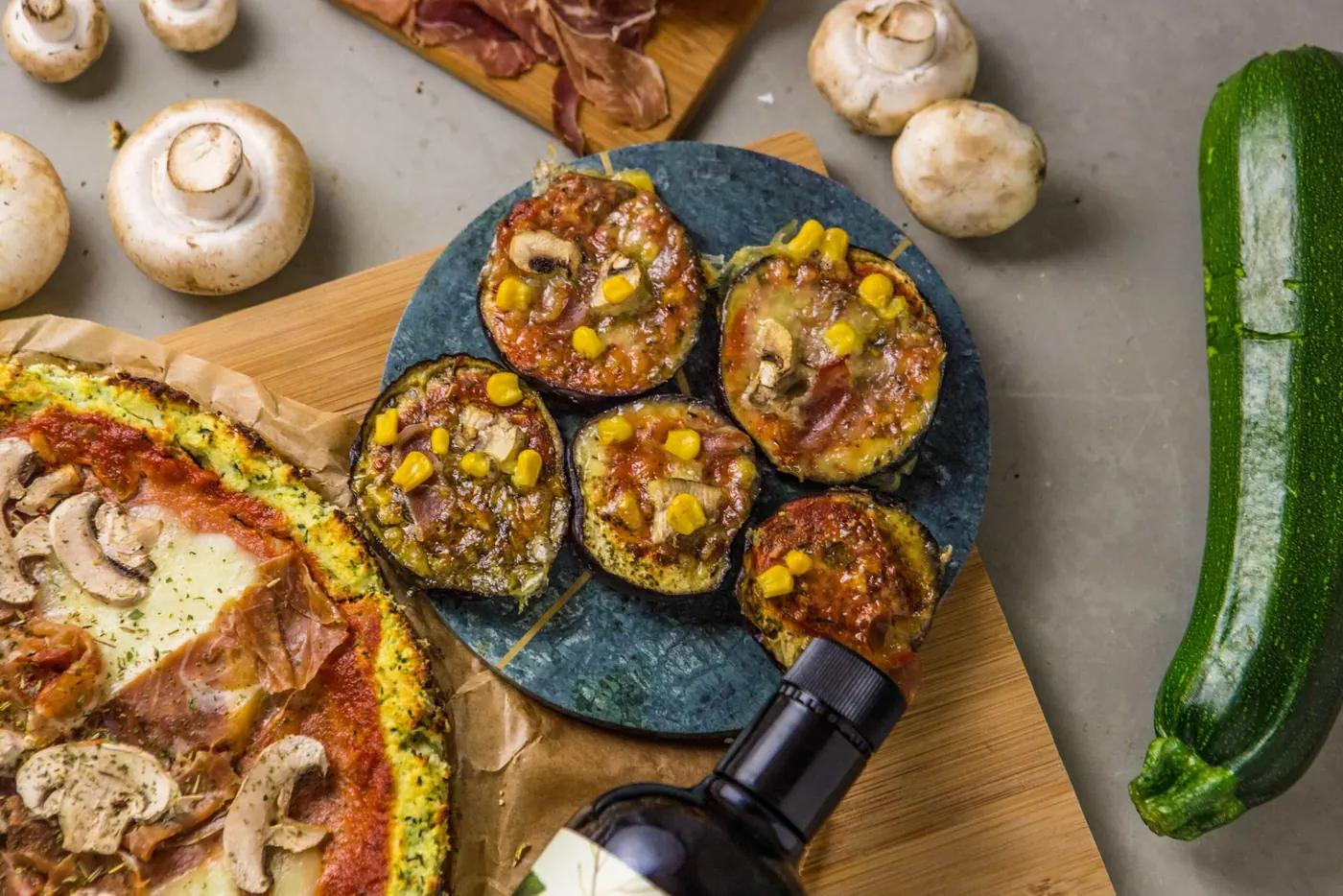
Tip: Salting the aubergine matters mainly with older ones, because they tend to be bitter and salt helps us draw that taste out. Definitely do not skip this step; with younger aubergines you can shorten the time the salt works.
For the luxurious photos and for making the recipes we thank The Tolerant Cook.
3. Sourdough pizza
This version is the most laborious, but it is guaranteed to bring you the most satisfaction and the most genuine pizza taste. As long as you do not eat the whole tray, you will also avoid digestive trouble, since sourdough is full of bacteria and yeasts that break down part of the gluten in advance during fermentation.
You will find the detailed recipe here.
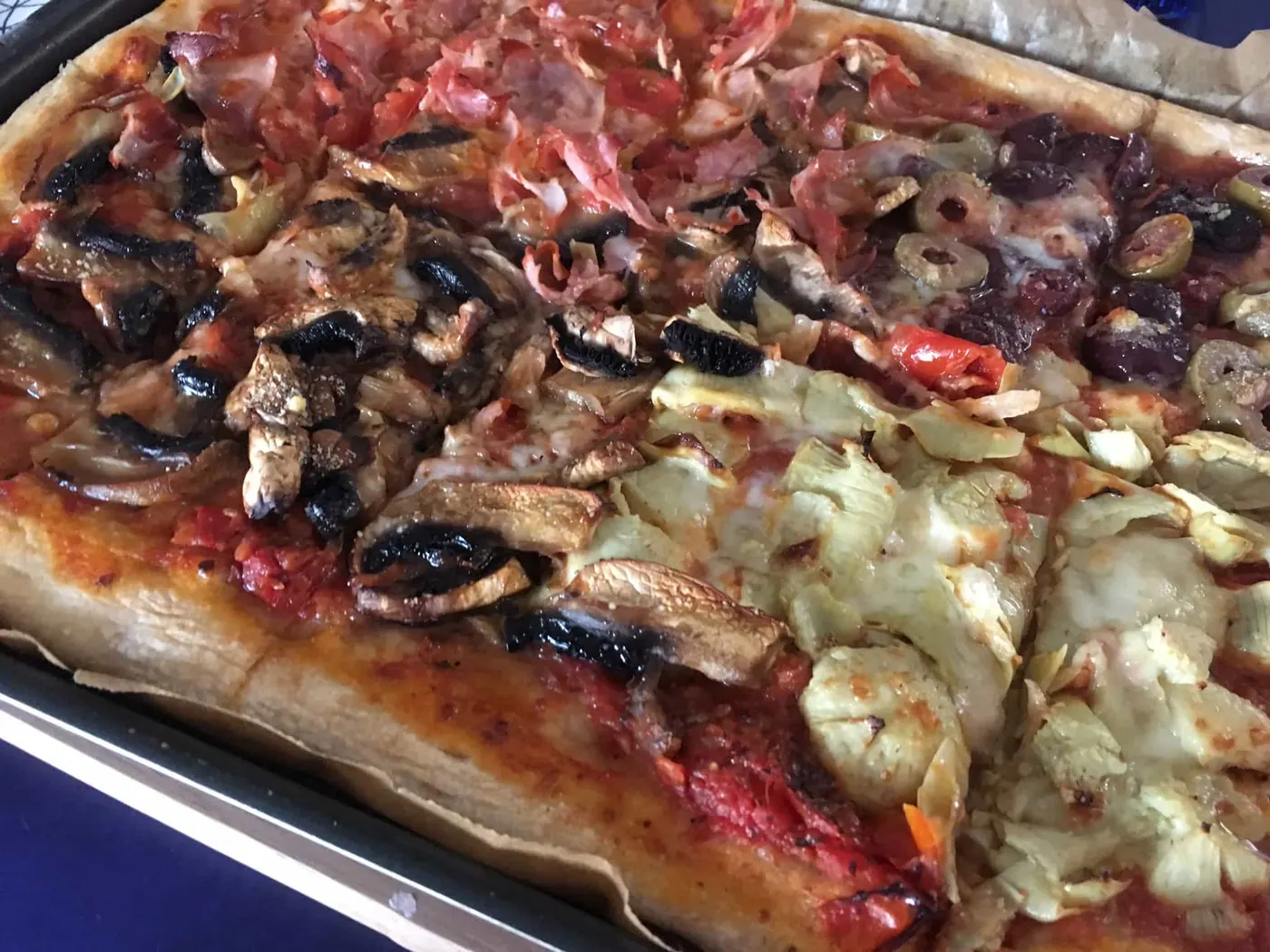
Tip: The thinner you make the dough, the smaller the intake of extra carbohydrates and the lighter the load on your metabolism.
If you do fancy a real pizza, then only a good one!
Sometimes you may feel an irresistible craving, or you are simply no ascetic and do not want to give up real pizza. As an occasional thing that is fine; food is meant to be a joy, and this is a great opportunity to meet friends. But go for quality and avoid fast food! Besides the enormous difference in taste, you will also save yourself extra digestive trouble.
We have picked out for you the places in and around Bratislava that we have checked ourselves, where they really do care about the quality of the ingredients and make pizza honestly and with love:
1. MASSIMO Ristorante – A special tip from the circle of friends of The Tolerant Cook; it is in Riverpark in Bratislava and is named after its owner Massimo Attanasio. An Italian restaurant with a small selection of pizzas, but all made with top ingredients straight from Italy. The kitchen and grill are open and their priority is to create an unrepeatable experience of sight, smell and taste in a pleasant, hospitable and cosy atmosphere.
2.Basilico – again a genuine Italian atmosphere, right in the centre of Bratislava. Originally a small place near the bus station, it had to move to bigger premises because of the huge interest. You will literally drown in flavours, carbohydrates and fats, but it is unbelievably worth it! (A few days before and after a visit, it is better to be extra careful with your sugar intake)
3. Da Mario e Nicola – this is definitely the tastiest part of Stupava and a place that will certainly not disappoint pizza enthusiasts. Secret sources say that Dušan Plichta ate here too and did not feel bad afterwards at all! And apparently he would vouch for this place with his life.
The chain of 3 Italian restaurants Gatto Matto is also interesting, as is the old Bratislava classic that has kept its quality, La mamma.
And what about you, do you like pizza? How often do you treat yourself to it? Do you make it at home or would you rather be served in a good place? Share your tips for making pizza or your favourite place in the comments.


Comments
There are no comments yet.