
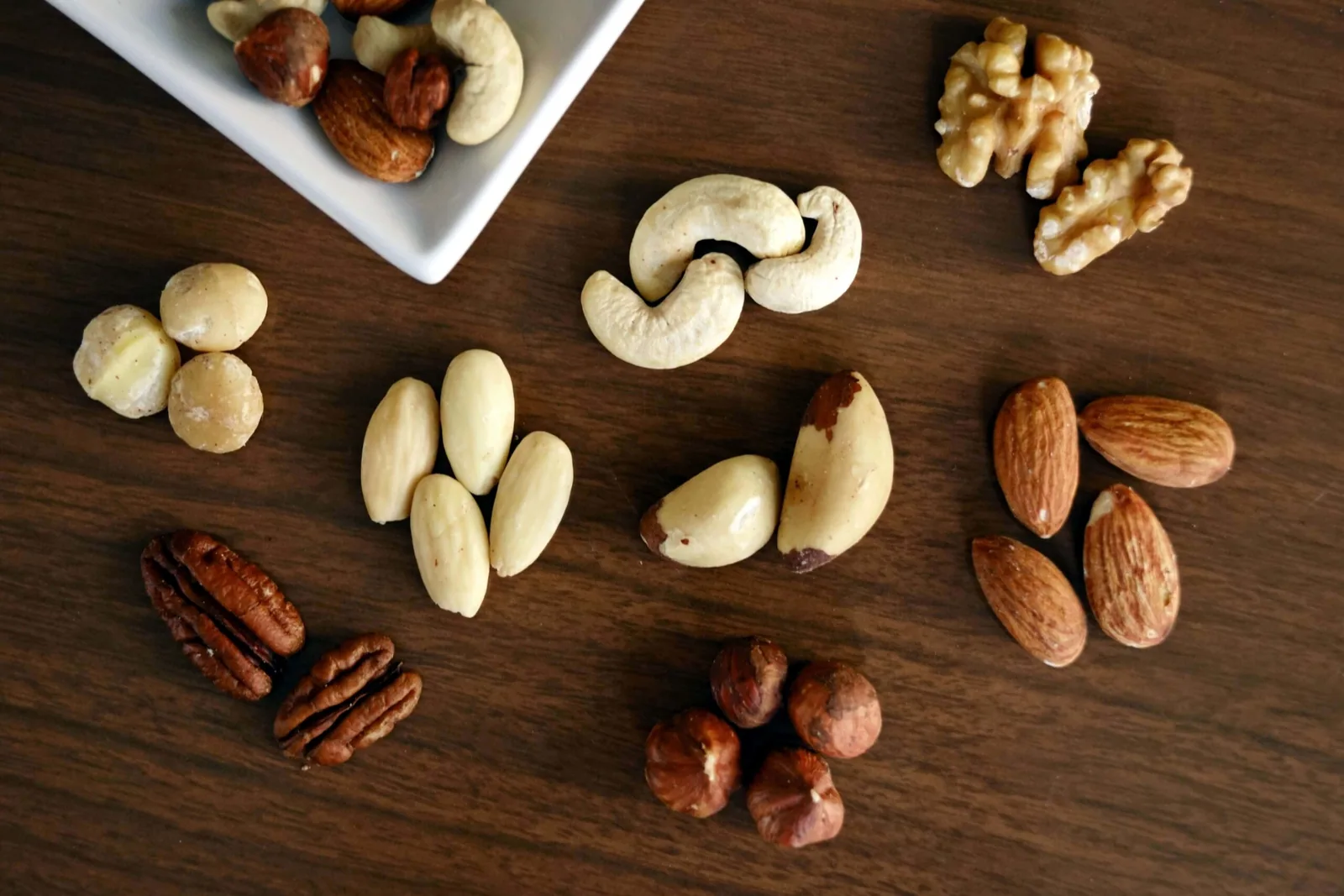
There is certainly plenty to choose from if we take a closer look at the rich range of nuts on supermarket shelves or on the websites of various e-shops. More and more studies and research confirm the contribution of nuts to our health, and with that the interest in nuts is growing among the general population, among athletes and especially among people who try to improve the quality of their life through their diet. Choosing the right nuts for our needs is not made any easier by the fact that some “exotic” kinds of nuts have only been available here for a few years (pecans, Brazil nuts, macadamias).
In this article you will read:
- Why the choice of nuts matters on low carb diets
- An explanation of the term “net carbs”
- A detailed overview of nuts suitable for a low carb way of eating
- Why to include each kind of nut in your eating routine, and also the drawbacks of each one
- General pros and cons connected with eating, quality and storage of nuts
At first sight it might seem that all nuts have a very similar composition. With almost all nuts we can speak of a high share of desirable fatty acids, of plant proteins and, on the other hand, of a relatively low share of carbohydrates. For these reasons nuts appear to be a food suitable for every way of eating. The opposite is true, and especially with low carb approaches (paleo, keto) CARBOHYDRATES MATTER! This fact makes choosing suitable nuts somewhat harder. Each kind of nut has its own specifics, so in the following overview we will look at their nutritional profile and pick the most suitable ones for our low carb, paleo, keto or other needs.
In the following overview we will also give the value “net carbs”. In short, these are the carbohydrates our body can digest and use. After food is eaten, most carbohydrates are broken down into so-called individual sugar units by enzymes produced in the small intestine. And it is these individual sugar units that our body can absorb and use. Some carbohydrates, however, cannot be broken down into individual sugars, while others are broken down and absorbed only partly (fibre). For this reason we subtract most of the fibre from the total share of carbohydrates in foods and arrive at the net carbs value. The topic of net carbs is fairly controversial, but it is commonly used in low carb circles, especially abroad.
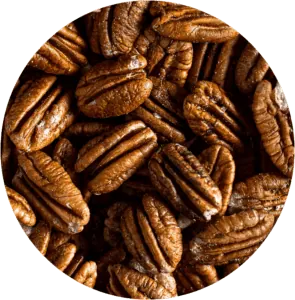
1. Pecan nuts
Values per 28 g (one portion, roughly 19 pcs)
- Calories: 196 kcal
- Protein: 3 g
- Fat: 20 g
- Carbohydrates: 4 g
- Fibre: 3 g
- Net carbs: 1 g
Pecans took the top place in our overview thanks to their excellent nutritional profile with regard to low carb needs. They have a high content of beneficial fats, of which as much as 91 % are monounsaturated fatty acids, and their composition makes them suitable even for a stricter keto diet. Pecans originate in South America and the original inhabitants already used them for their beneficial effects on the human body.
Positives connected with eating them:
- Pecans are rich in minerals, specifically potassium 116 mg, phosphorus 78.2 mg, magnesium 34.2 mg and also calcium 19.8 mg per 28 g portion of nuts.
- They contain more than 19 minerals and vitamins.
- Because of their composition, rich in antioxidants and minerals, they are studied in connection with the nervous system and also with Alzheimer’s and Parkinson’s disease.
- According to a study they are associated with a lower risk of cardiovascular disease in obese people and also with lower cholesterol and blood sugar levels.
- A higher zinc content (1.3 mg in one portion) is associated with testosterone production.
- Another study states that pecans are a suitable food within weight-reduction diets.
Possible negatives connected with eating them:
- Pecans are generally considered a food that is suitable for almost everyone, without any marked negative side effects. However, some people may be sensitive to certain chemical substances found in these nuts. An allergic reaction shows up mainly as vomiting, swelling of the throat and tongue or rapid breathing caused by the release of histamines.
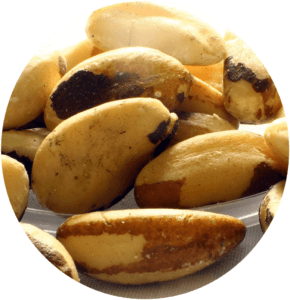
2. Brazil nuts
Values per 28 g (about 6 pcs)
- Calories: 185 kcal
- Protein: 4 g
- Fat: 19 g
- Carbohydrates: 3 g
- Fibre: 2 g
- Net carbs: 1 g
Number two among low carb friendly nuts are Brazil nuts, often also called para nuts. Brazil nuts are characterised by a fairly sweet, creamy taste. Like almonds, Brazil nuts are seeds, even though it has become the habit to consider them nuts, which after all is what they are called. These nuts offer a great many nutritional benefits arising from their excellent nutritional profile and their high content of minerals, vitamins and trace elements. It should be noted that a single nut covers the recommended daily amount of selenium.
Positives connected with eating them:
- An excellent source of selenium, which is needed for several bodily functions such as reproduction and protein synthesis.
- Some studies discuss the risk of a selenium shortfall on a keto diet. Brazil nuts are an easy way to solve that problem.
- Reported high anti-inflammatory effect.
- A high content of B-complex vitamins such as thiamine (B1), riboflavin (B2), pantothenic acid (B5), niacin (B3), folic acid (B9) and pyridoxine (B6).
- Favourable effects on cholesterol levels and the cardiovascular system, discussed by a 2019 study.
- A rich source of phosphorus, magnesium, manganese and zinc.
Possible negatives connected with eating them:
- Long-term high doses of selenium connected with excessive consumption of Brazil nuts can cause selenium toxicity.
- Also a relatively high content of aflatoxins, which are carcinogenic.
For these reasons it is advisable to eat Brazil nuts in limited amounts.
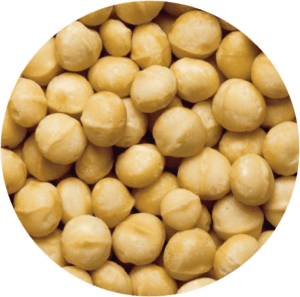
3. Macadamia nuts
Values per 28 g (about 10 kernels)
- Calories: 204 kcal
- Protein: 2 g
- Fat: 21 g
- Carbohydrates: 4 g
- Fibre: 2 g
- Net carbs: 2 g
Next in line are macadamia nuts, less known in our part of the world. Eating them is suitable for keto diets, as they have a markedly high share of fat and, compared with other nuts, are lower in carbohydrates and protein. Macadamia nuts originate in Australia. These Australian nuts are said to be a recipe for a healthier and longer life because of their rich nutritional profile.
Positives connected with eating them:
- A great source of monounsaturated fatty acids at 78 %, of vitamin B6, calcium, phosphorus, copper, iron, magnesium, manganese, potassium and zinc.
- They are studied for a protective function for the brain thanks to their palmitoleic acid content, which is supported by this study.
- The copper and thiamine B1 content supports brain function.
- Associated with lower cholesterol levels.
- Associated with a lower risk of cardiovascular disease, supported by a study.
- The magnesium content is linked with anti-inflammatory effects.
Possible negatives connected with eating them:
- Macadamia nuts are a significant source of phosphorus, so they are not ideal for people with kidney problems.
- A possible allergy, as with most nuts.
- A high degree of toxicity for pets (dogs).
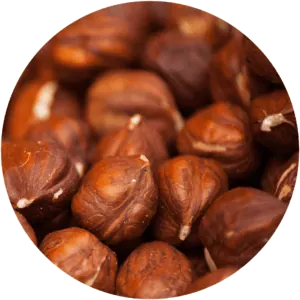
4. Hazelnuts
Values per 28 g (about 20 pcs)
- Calories: 178 kcal
- Protein: 4 g
- Fat: 17 g
- Carbohydrates: 5 g
- Fibre: 3 g
- Net carbs: 2 g
Because of their sweet taste, hazelnuts have very wide uses. They are most often associated with creams and spreads and used in various sweets. Although hazelnuts are very widespread here, their historical origin reaches to Asia. Together with Brazil nuts they have the highest calcium content. Thanks to their composition, hazelnuts are an equally suitable nut for a low carb diet.
Positives connected with eating them:
- An excellent source of vitamin E – in one portion of these nuts (28 g) we get almost 30 % of the recommended daily amount of this vitamin.
- The vitamin E mentioned is associated in studies with a reduced risk of cardiovascular disease and also with lower cholesterol. Tocopherol is also an excellent antioxidant that binds unfavourable free radicals.
- A high content of other vitamins and minerals, specifically vitamin B1, B6, manganese, magnesium, calcium, phosphorus, iron and zinc.
- They are also known as a significant source of polyphenolic compounds, which are important in dealing with inflammation, oxidative stress and lowering undesirable LDL cholesterol.
Possible negatives connected with eating them:
- Most of the antioxidants are found in the skin, and they are degraded by heat treatment.
- In reasonable amounts hazelnuts are a harmless food, but as with all nuts there are negatives connected with a possible allergic reaction and a relatively high calorie content.
Try our Low Carb hazelnut cream
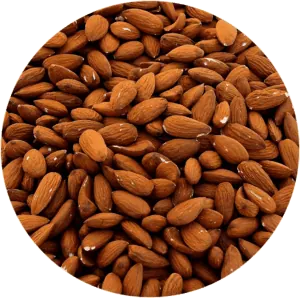
5. Almonds
Values per 28 g (about 23 pcs)
- Calories: 164 kcal
- Protein: 6 g
- Fat: 14 g
- Carbohydrates: 6 g
- Fibre: 4 g
- Net carbs: 2 g
Almonds, also called royal nuts, earned that title with their composition. If we look more closely at their nutritional composition, we can happily put almonds on the list of low carb friendly nuts. After all, they are in this overview, and that says it all. Technically, almonds are not nuts but the seeds of the fruit of the common almond tree. Almonds are fairly widespread here and are used both in households and in healthy eating, and also in the food industry.
Positives connected with eating them:
- Almonds are rich above all in vitamin E, and the 28 g portion mentioned contains 37 % of the recommended daily amount. From that portion you also get 20 % of the recommended daily intake of magnesium. We must not forget other substances useful to the body such as copper, vitamin B2 and phosphorus.
- This study reports a greater positive effect of almonds on the cardiovascular system when almonds are eaten with dark chocolate with a high content of good-quality cacao.
- Almonds are full of significant antioxidants, and the largest share of them belongs to the vitamin E mentioned, also called tocopherol, which according to studies has been linked with a lower risk of cancer.
- Vitamin E as an antioxidant together with collagen is a popular combination for people who care about the quality of their skin.
- Other advantages for our health associated with eating almonds are above all lower blood sugar, lower LDL cholesterol and lower high blood pressure. And we certainly must not forget the reduction of hunger and help with keeping to a desired weight.
- A significant source of polyunsaturated fatty acids, especially omega-6.
Possible negatives connected with eating them:
- A possible allergen
- If almonds are stored incorrectly, they are considerably prone to moulds and the aflatoxin (a carcinogen) associated with them.
- A possible oxalate content – for this reason extra care is needed in the case of kidney disease.
- Excessive consumption of almonds (100 g a day and more) can cause certain difficulties. For example, you can overdose on vitamins and minerals, which leads mainly to stomach trouble such as diarrhoea and abdominal pain.
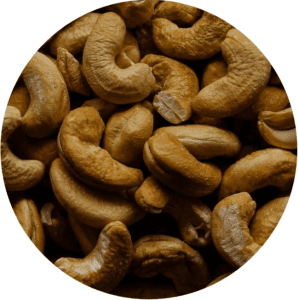
6. Cashew nuts
Values per 28 g (about 18 pcs)
- Calories: 157 kcal
- Protein: 5 g
- Fat: 12.4 g
- Carbohydrates: 9 g
- Fibre: 1 g
- Net carbs: 8 g
Cashews are characterised by their buttery, sweet body and a slightly salty aftertaste, with an unmistakable shape. They are a significant source of vitamins and minerals. Although cashews have a relatively high carbohydrate content, their positive effects earn them a place in our overview for less strict low carb approaches. It should be noted that cashews are not a typical nut, and the kernel itself is found at the end of the fruit known as the cashew apple.
Positives connected with eating them:
- A high content of bioactive substances and of vitamins E, K and B6, together with minerals such as copper, phosphorus, zinc, magnesium, iron and selenium.
- Research indicates that cashew nuts may be associated with a lower risk of cardiovascular disease.
- This study reports that cashew nuts are associated with lower blood pressure and at the same time with higher desirable HDL cholesterol.
- Another study concludes that, on the basis of their composition rich in beneficial fats, cashew nuts support brain function.
Possible negatives connected with eating them:
- A possible allergen.
- Cashew nuts are rich in oxalate salts, which interfere with the way calcium is absorbed in the body. Unabsorbed calcium can lead to the formation of kidney stones.
- A higher carbohydrate content and a lower fibre content.
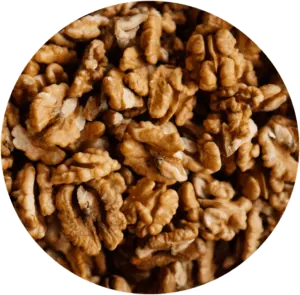
7. Walnuts
Values per 28 g (about 14 kernel halves)
- Calories: 185 kcal
- Protein: 4 g
- Fat: 18 g
- Carbohydrates: 4 g
- Fibre: 2 g
- Net carbs: 2 g
Judging by the nutritional values given, we can confidently say that they are very suitable for all low carb ways of eating. However, extra care is needed especially with regard to their composition and specifically to omega-6 fatty acids. For these reasons they are at the tail of our overview. Walnuts are very widespread both here and worldwide, mainly because of their composition, which with regular consumption offers a large number of health benefits.
Positives connected with eating them:
- Walnuts are known for their high content of polyunsaturated fatty acids, above all omega-6 and omega-3, which make up as much as 71 % of the fatty acid content. On the basis of a study it is omega-3 fatty acids that are associated with a lower risk of cardiovascular disease and also of stroke.
- Another study reports lower LDL cholesterol levels and a favourable influence within weight-reduction diets.
- A high content of essential minerals such as zinc, potassium, manganese, calcium, magnesium, selenium and iron. These minerals are very beneficial for the human metabolism and have a favourable influence on sperm production, on digestion and on overall development.
- A rich source of the B and E groups of vitamins and also of minerals, which are excellent antioxidants with a protective function against free radicals and support the correct functioning of cells.
Possible negatives connected with eating them:
- Risk of allergy.
- A high content of omega-6 fatty acids.
- Harder to digest.
- A relatively high risk of oxidation if stored incorrectly.
Of course, other kinds of nuts should be mentioned as well, for example pistachios, but precisely because of their higher carbohydrate content they did not make it into the low carb overview above. Sunflower and flax seeds are worth mentioning, as they give us variety and new tastes in low carb eating. They also offer comparable nutritional advantages to the seven kinds of low carb friendly nuts mentioned. In terms of macronutrients, peanuts also look like suitable “nuts”, but as is generally known, peanuts are a legume and moreover contain a high amount of lectins. Of course, in a small amount peanuts will not harm you, but they are not the most suitable biohacking food.
Nuts are an excellent source of important antioxidants, vitamins, minerals and other beneficial bioactive substances and phytonutrients such as plant sterols and the like. Not all nuts have an identical composition and each kind excels in the content of different beneficial substances. For this reason it is important to combine kinds of nuts and get the maximum of positives for our body from them. You can also draw advantages from combining and from synergy with other foods, as in the case of almonds combined with good-quality dark chocolate.
It should be noted that nuts offer us the most of the desired elements in a raw and natural state without additives (sugar, salt, poor-quality chocolate). Heat treatment such as baking and roasting reduces the content of bioactive substances.
Antinutrients are one of the few little flaws of nuts, as they worsen the use and absorption of individual substances beneficial to health. We are speaking mainly of phytates and oxalates. Also, with some kinds it is necessary to mention the high content of omega-6 polyunsaturated fatty acids and the worsening of the ratio to omega-3 fatty acids.
A very important factor is the quality of the individual nuts. If nuts are stored incorrectly, they are considerably prone to moulds and the aflatoxin (a carcinogen) associated with them. These moulds look like black and grey threads. That is why we recommend buying trusted products of the highest quality.
However, with nuts too the rule applies that too much of anything is harmful. Excessive consumption of nuts can cause certain difficulties. Specifically, you can overdose on some vitamins and minerals or, with lower quality, take in a larger amount of antinutrients, which cause unwanted health trouble such as liver damage. The recommended amount differs for each kind – with Brazil nuts, for example, the amount is considerably limited because of the high selenium content.
The Cleveland Clinic has issued a statement on the recommended daily amounts of various kinds of nuts:
- 24 almonds
- 14 walnut halves
- 15 pecan halves
- 12 hazelnuts
- 12 macadamia nuts
- 18 cashew nuts
Incorrect storage causes some kinds to turn yellow, which is a sign of oxidation of the double bonds and leads to fairly rapid degradation and spoiling. Dry, dark and cool places are ideal, as they reduce the risk of nuts oxidising.
Summary
- Thanks to their composition, nuts are a suitable food for every low carb approach from paleo to keto, but the right choice matters.
- Individual kinds of nuts have different contents of vitamins, minerals and trace elements, so it is a good idea to combine them.
- Despite the undeniable advantages, it is important not to forget the negatives of the nuts listed.
- It is important to pay attention to quality, origin and storage, which are commonly neglected and often the reason why nuts become harmful.
- To minimise negative effects it is a good idea to keep to the recommended daily amounts of the individual nuts.


Comments
There are no comments yet.