
Updated in April 2024.
What is histamine and histamine intolerance? How is it diagnosed? Does it really mean that I can hardly eat anything? Are Powerlogy products suitable with this diagnosis? You will find the answers to these and other questions in this article.
In the article you will also find products chosen especially for people with histamine intolerance, such as organic ghee butter, gluten-free granola and poppy seed and almond cream.
What histamine and histamine intolerance (HIT) are
The term histamine intolerance (HIT) comes up more and more often, yet many people have no idea what it actually is. And the truth is that doctors themselves do not always know either, because the condition is still not fully researched. It entered medical terminology only recently, and the original name comes from the theory that HIT arises when the enzymes that break histamine down do not work well enough.
Today, however, we know that the issue is far more complicated, and the cause is not always enzymatic. The culprit may be an unsuitable lifestyle, increased stress, a poor diet or too much histamine from food. It may equally be the aftermath of a more serious illness, or the medication someone is taking.
Histamine intolerance or histamine allergy?
Do not confuse histamine intolerance with an allergy. There is no such thing as a histamine allergy, because an exaggerated reaction of the body to histamine belongs among intolerances, not allergies.
The body cannot cope with a large amount of histamine and responds with defence mechanisms. You may feel tired, bloated, weak, dizzy or notice many other signs. In principle, though, it is not a life-threatening state and on contact with histamine the body does not create any antibodies1.
Allergic food reactions are far more violent. The immune system treats a component of the food as foreign and dangerous and starts producing antibodies against it. These show up on the body very quickly, often as sudden swelling of the throat or tongue, a drop in blood pressure, choking or loss of consciousness.
That means that if histamine causes you trouble, you do not have a histamine allergy but an intolerance. “Histamine allergy” is simply a term used incorrectly.
How is histamine intolerance diagnosed?
Diagnosing histamine intolerance is not at all straightforward. Here it is most commonly diagnosed by an allergist from a blood sample. The patient then leaves with a leaflet in hand and a recommendation to exclude high-histamine foods according to the list they were given. And that is where the problem starts.
First, the patient has no idea what the condition is about, because they were not given enough information. So they stay stressed – without even knowing that stress is the biggest trigger of symptoms in HIT.
Second, they will probably start following one of the many lists, which often contradict one another. Then a situation arises where someone with histamine intolerance eats the same 10 foods over and over, believing that everything else harms them, without realising that the monotony of the diet does far more harm.
The Swiss food list
About the lists I would say only one thing. There really are many of them, and it is not entirely true that one should not follow them. At the beginning I too, of course, followed one of them (the Swiss food list, probably the most relevant of them all), but only up to a certain point.
What is the Swiss list?
This list was created by Heinz Lamprecht and it is among the most realistic ones. Mr Lamprecht has no medical training, but he has HIT himself and works on the list continuously with many other people with histamine intolerance. They state transparently the sources they drew on and add their own experience to the Swiss list. The site is not run by doctors, but the list is updated regularly.
The Swiss list is one of the best you can reach for at the start of HIT. The author himself recommends the list only as a springboard.
You can also find the list as a PDF and in Slovak – Swiss list PDF.
The key is to put together your own list, or rather your own menu, yourself! Because everyone with histamine intolerance is an individual. You will not find two people with the same symptoms or the same well or badly tolerated foods. That is why questions such as “Can I have a banana? Can I have cheese? Can I have spelt flour?” are beside the point. One person can, another cannot, and the cause need not be HIT at all.
Other associated conditions may also occur
Many associated conditions and allergies go hand in hand with HIT, such as coeliac disease, lactose intolerance, cow’s milk protein allergy, SIBO and the like. On top of that, a person may take some medication long term, which works differently than in another person with histamine intolerance who takes none. Lifestyle is an equally important factor – stress, sleep, physical activity and so on. That is exactly why this diagnosis is so hard to understand.
I will try to explain it to you as simply as possible. The way I came to understand it myself. Because HIT is not nearly as terrible a diagnosis as many make it out to be. Yes, you have to change your lifestyle and the way you think about food, but on the other hand it is a change for the better. The basis is to avoid convenience foods and processed foods that are full of unnecessary colourings, flavourings and additives.
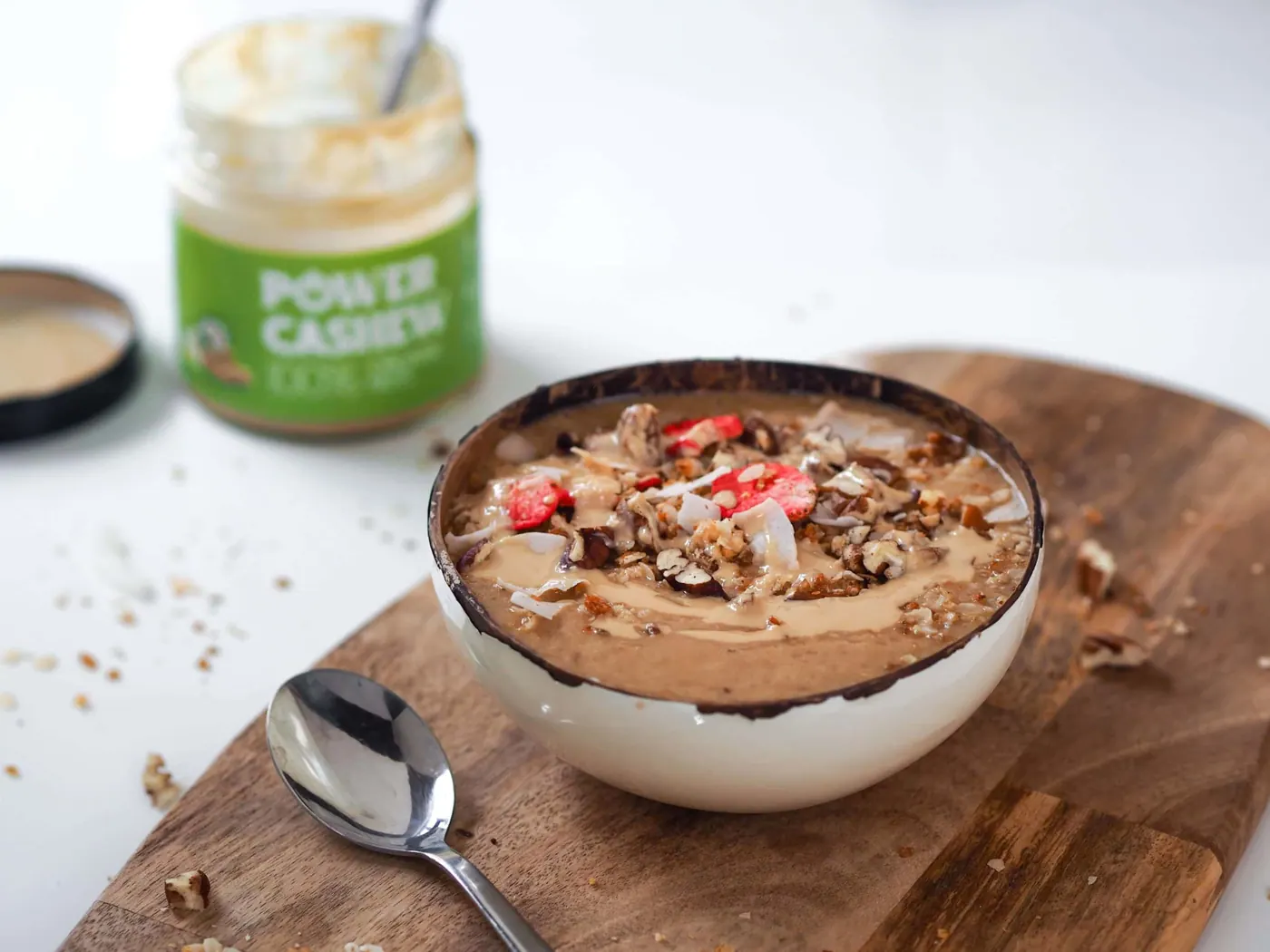
Together with Paťka, the author of the article, we also prepared a video recipe for a quick functional breakfast. Fruit porridge with MCT oil is suitable for people with histamine intolerance as well as for all the groups of intolerances mentioned!
And freshness! Do not store food or cook a week ahead. Buy good-quality food from a trusted source (especially meat, fish, dairy products and eggs) and avoid food that is going off or fruit and vegetables that are overripe. Take the banana as an example, because in most lists it appears among the forbidden foods. Yet there is not even a mention that this applies to an overripe banana – one with brown spots. As soon as I eat a slightly green or yellow, perfectly ripe banana, it causes me no trouble at all.
What is better avoided
It is the same with other fruit and vegetables. Naturally there are exceptions, but compared with what the lists forbid there really are very few. Only tomatoes, aubergine, avocado and spinach count as high-histamine. Not a single fruit has been confirmed as high-histamine, although citrus fruit (classed among liberators, that is, substances that release histamine from cells) and strawberries (because they are prone to rot, since they grow close to the ground) can be debatable.
And now, out of interest, have a look at one of the lists. What else does it forbid? Buckwheat, pulses, cinnamon… Yes, these also appear among the forbidden foods, and there is little point in commenting on that at length. Simply try them and you will probably find that they are on the list without justification.
When wholesome need not be wholesome
Unfortunately, the fact is that a few beneficial foods have to be excluded as well. At least until you get to know your body and know what suits it and what does not. This concerns, for example, sauerkraut, kimchi, apple cider vinegar, sourdough bread, good-quality high-percentage chocolate or fermented dairy products such as soured milk or bryndza cheese. I do, however, know people further along with histamine intolerance who have started to include these products in their menu, because they are very beneficial. I certainly do not recommend that in the first phases, and definitely not on an elimination diet! The point of that diet is for a person to find out what does and does not cause them trouble.
Histamine intolerance VS allergy
Besides the facts listed above, the amount matters a great deal with HIT. While people with an allergy (to peanuts, soya, shellfish, gluten and so on) can react even to traces, with HIT a small amount often causes no reaction. That is why there are people with histamine intolerance who tolerate 1-2 cherry tomatoes picked in their own garden. Just not every day. As the saying goes, you have to be careful not to overfill the so-called histamine bucket. And of course, once again I stress quality. There is a difference between a summer tomato from the garden and a winter tomato from the supermarket.
And now I would move on to Powerlogy products, because people with histamine intolerance often ask me whether they can have them. That, after all, is what led to this article being written. ? If you have read it carefully, you can already answer for yourself. Among the Powerlogy products there are two questionable ones, namely Powerlogy Nougat Cream and Powerlogy Chocobars. In the first phases I do not recommend them to people with histamine intolerance. In time they are certainly worth trying, and I think that in small amounts they should not cause you any trouble. Good-quality chocolate is a source of antioxidants, and many people find that it helps them unwind and simply enjoy the moment. And that is very important with HIT, isn’t it? ?
Next I will mention Powerlogy Granola, which also contains freeze-dried strawberries. As I wrote above, strawberries are not high-histamine! At the same time, bear in mind that not every strawberry is the same. The strawberries in this granola were not bought in winter in a plastic box in a supermarket – they were grown to a high standard, checked and carefully dried. This too is one of the basic rules with HIT. Understand seasonality and buy honest, good-quality food.
WHOLESOME FOODS FOR PEOPLE WITH HISTAMINE INTOLERANCE
Try the Powerlogy products suitable for people with histamine intolerance
A closing word
Following on from that, I will move to the nut creams, which are probably Powerlogy’s greatest pride. I cannot even find a reason why people with histamine intolerance could not have them. ? Again I can only mention that if some list forbids, say, cashew nuts, it is either because of the amount (in large amounts they can be heavy on the stomach – but that goes for a healthy person too, not only for someone with histamine intolerance) or because of quality.
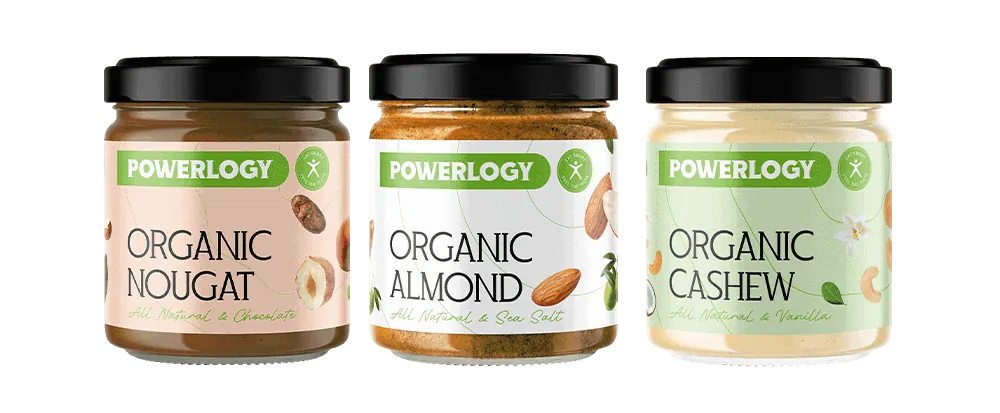
The sticking point is that nuts are prone to moulds. If they are stored and processed correctly, however, there is no risk of these foods containing high amounts of histamine. What is more, Powerlogy products have excellent laboratory test results for quality, including mould content!
I hope that this little “HIT manual” and the overview of Powerlogy products for this condition have helped you, and that it will make shopping easier for you.
The author is Paťka from the blog hitjezdravozit.sk. As this topic is very widely discussed at the moment and at the same time very complex, we asked her to explain HIT in a clear article.
Scientific sources:
1. https://www.ncbi.nlm.nih.gov/pmc/articles/PMC7463562/
Image source: Powerlogy, Unsplash


Comments
There are no comments yet.