
Proteins, plant or animal proteins, essential and non-essential amino acids and many other terms we come across every day are at first sight quite ordinary words that we ought to pay a little more attention to, and not only from the point of view of shaping our figure, but above all because your body and your general health deserve it. Anyone who takes an interest in diet and the healthy lifestyle that goes with it should know that protein, alongside fats and carbohydrates, is a basic macronutrient. That statement is of course not enough for us, so let us look at protein in more detail.
In this article you will read:
- What proteins are and what proteins are made of
- The classification of amino acids and proteins
- A description of selected functions of proteins in the human body
- The recommended daily intake of protein and its sources
- Inspiration for protein meals
What are proteins?
Proteins, also called proteins, are the most complex molecules in terms of both their structure and their functionality. The structure and functioning of our body depends on proteins. We find proteins throughout our whole body – in all cells, muscles, bones, hair, skin and all tissues. In connection with the previous statement we can say without hesitation that proteins are essential for maintaining and building health.
Proteins are organic compounds made up of a large number of different amino acids joined into a single whole. Amino acids are organic molecules containing carbon, hydrogen, oxygen, nitrogen and often sulphur as well. In plants and animals there are usually twenty different amino acid building blocks. In humans there are 20+ (different sources give 20 or 21 kinds of amino acid) proteinogenic amino acids from which proteins can be formed. Hundreds of different amino acids occur in nature, but the specific number and order of amino acids is unique in every protein. Depending on the number and sequence of amino acids, a protein folds into a specific shape. That shape is very important, since it determines the protein’s function. All animal species, including humans, have their own characteristic proteins.
We now come to fairly well-known terms and statements, such as the fact that proteins can be divided into essential and non-essential. So what does that mean? The body cannot produce essential amino acids itself and we have to obtain them from the food we eat. Non-essential amino acids, by contrast, the human body can produce itself.
Essential amino acids:
- Histidine
- Isoleucine
- Leucine
- Lysine
- Methionine
- Phenylalanine
- Threonine
- Tryptophan
- Valine
Non-essential amino acids:
- Alanine
- Arginine
- Aspartate
- Aspartic acid
- Cysteine
- Glutamic acid
- Glutamine
- Glycine
- Proline
- Serine
- Tyrosine
European Food Safety Authority, Scientific Opinion on Dietary Reference Values for protein
Another important term from the basic classification of amino acids is conditionally essential amino acids. Conditionally (semi-essential or relatively) essential amino acids are specific in that their production and synthesis is conditional on a physical or pathological state, such as a person’s developmental phase, illness, stress and the presence of essential amino acids. These amino acids include arginine, cysteine, glutamine, glycine, proline and tyrosine.

In the following parts of the article further classifications of proteins from various points of view will be mentioned, but it is essential first of all to introduce the functions of proteins in the human body.
The function of proteins in the human body
It is no wonder that the functions proteins carry out are as varied as the different combinations of amino acids from which proteins are formed. So let us look in more detail at how proteins “influence” our everyday life.
The energy and nutritional function
In the previous part of the article it was mentioned that proteins are one of the basic macronutrients. Even if for some people this function as number one on the list will be controversial, the energetic importance of proteins for the human body is undeniable. If only because proteins contain the characteristic and irreplaceable nitrogen. Proteins provide 4 calories per 1 gram. It is important to state here, however, that protein as a source of energy is the body’s last choice because of its valuable nutritional properties throughout the whole body. Fats and carbohydrates are a far more suitable alternative as a source of energy. This is also confirmed by the findings of this study, which says that fats and carbohydrates are better metabolised than proteins. In some cases, such as longer fasting of around 18 to 48 hours, the body breaks down skeletal muscle into amino acids so that it is supplied with energy to cover the energy demands of vital functions. This is also confirmed by the findings of this study. After all, most of the public sees protein as a nutritional value when eating and pursuing certain goals.
The structural, building and maintenance function
The body needs proteins for the growth and maintenance of tissue, since proteins are constantly being broken down in the body and new proteins are being formed at the same time. Under normal circumstances the body breaks down the same amount of protein as it needs to build and “repair” tissues. On the other hand, a state can arise where the body breaks down more protein than it can create, and that raises the body’s demands for protein intake. Structural proteins play the main role in these processes. Among the best-known structural proteins we can include collagen and keratin. The protein collagen is a basic building block of skin, hair, nails, bones, tendons, joints and cartilage. It could be called the glue that holds us together. The body does produce it naturally, but as we age its production gradually declines, which is why it is worth considering quality supplementation. It is with collagen that we at Powerlogy see a big difference between an ordinary and a genuinely quality product. We offer pure powdered collagen as well as collagen protein bars for topping up protein quickly.
Support for biochemical reactions
The proteins most often mentioned in connection with this function are without doubt enzymes. Enzymes assist a great many biochemical reactions. Among other things, the function of these proteins is to break down the more complex molecules we take in from food. That then leads to better absorption during digestion. Some enzymes require further molecules, such as vitamins or minerals, in order to carry out a reaction. Bodily functions that depend on enzymes:
- Digestion
- Energy production
- Blood clotting
- Muscle contractions
You can read more about enzymes and the functions mentioned with them here.
Proteins and their transport function
Transport proteins carry substances (containing vitamins, minerals, blood sugar, cholesterol) through the bloodstream into cells, out of cells or with cells. Here we speak, for example, of haemoglobin, which carries out a very important transport function in our body, without which we would not be able to function. Put simply, haemoglobin is a protein containing iron that transports oxygen into tissues and carbon dioxide away from tissues again. Transport proteins are very specific. That means they will bind only to particular substances. In other words, a transport protein that transports glucose does not carry cholesterol, for example. This is also discussed in this publication.
Immunity and the defensive function of proteins
Proteins are a very important part of the immune system and of the defence mechanisms of the human body.
Antibodies, also called immunoglobulins, are a protective protein produced by the immune system in response to the presence of a foreign substance (a virus, bacterium or other pathogen) in the human body. The body produces these antibodies, and when any substances foreign to the body enter it, the antibodies mark them and white blood cells then destroy them. This statement rests on the conclusions of this publication. Without antibodies, bacteria and viruses could multiply freely in the body, which would result in the illnesses these unwanted agents cause. When the body produces antibodies against a particular bacterium or virus, the information on how to make these antibodies in future remains in the cells. That allows the antibodies to react quickly when the bacteria or viruses in question try to attack the body. As a result, the body builds immunity against the unwanted agents that cause disease.
Everyday movement and proteins
Movement as such is so automatic for people in everyday life that we do not even realise how many processes have to take place in the body for us to be able to move. We, however, will focus on movement from the point of view of the function of proteins. About 40 % of the body weight of a healthy adult weighing around 70 kilograms is muscle, and muscle is made up, among other things, of muscle proteins (actin and myosin), which account for about 20 % of it. The human body therefore contains roughly 5 to 6 kilograms of muscle protein. In muscles, actin and myosin filaments are oriented parallel to each other. The joining of actin molecules with myosin heads causes the myosin heads and actin molecules to slide from both sides towards the centre, and that produces muscle contraction and consequently movement. **If you play sport regularly, you can help your muscle proteins with a suitable protein before or after training. An example is Powerlogy sports protein with beef protein, MCT fats and Palatinose®, which works in a shaker as well as at breakfast.**
The types of protein mentioned and their functions are only a small sample of how many different functions proteins carry out in our body. Besides those listed, the storage, sensory and regulatory functions should also be mentioned. In those functions various kinds of protein, such as hormones, play their irreplaceable role.

How much, which kind and how?
World recommendations differ slightly in their views on how much protein an adult should take in per day. In general, however, the prevailing view is that an adult should take in approximately 0.8 g of protein per kilogram of body weight. This figure is also confirmed by the European Food Safety Authority, which gives specific figures divided into age categories:
Adults (including older people) – 0.83 g per kg of body weight per day.
Infants, children and adolescents – between 0.83 g and 1.31 g per kg of body weight per day depending on age.
Also mentioned are pregnant and breastfeeding women, who should increase their daily protein intake. An exact figure is hard to determine, since every body is very individual and it also depends on physical activity during the day.
Endurance athletes may need from 1.0 to 1.6 g of protein per kg of body weight depending on training intensity.
The recommendations for strength training or strength athletes are in the range of 1.6 to 2.0 g per kg of body weight. The National Academy of Medicine issued a recommendation stating that 10 to 35 per cent of daily calories should come from protein. This of course depends on an individual’s own circumstances.
With protein too it holds that not all protein is equal and that not all the protein we eat is turned into protein in our body. When we eat foods containing amino acids, the body creates proteins from them as needed. If we do not take in certain amino acids, the body will not be able to synthesise enough proteins for our body to function properly, because it will not have all the building blocks it needs. As mentioned, there are nine essential amino acids that the human body does not synthesise, so they must come from the diet. All the proteins we take in from food contain some of each amino acid, but in different ratios. Foods that contain the essential amino acids in roughly equal ratios can be called complete proteins. These proteins come mainly from animal sources such as milk, meat, eggs and the like. On the other hand, quinoa, for example, is a plant source of complete protein. The body does not, however, need all the essential amino acids at every meal, because it can use amino acids from recent stores to create complete proteins.
Animal foods as sources of protein
Poultry – chicken, turkey and duck meat
Unprocessed meat – beef, pork and others
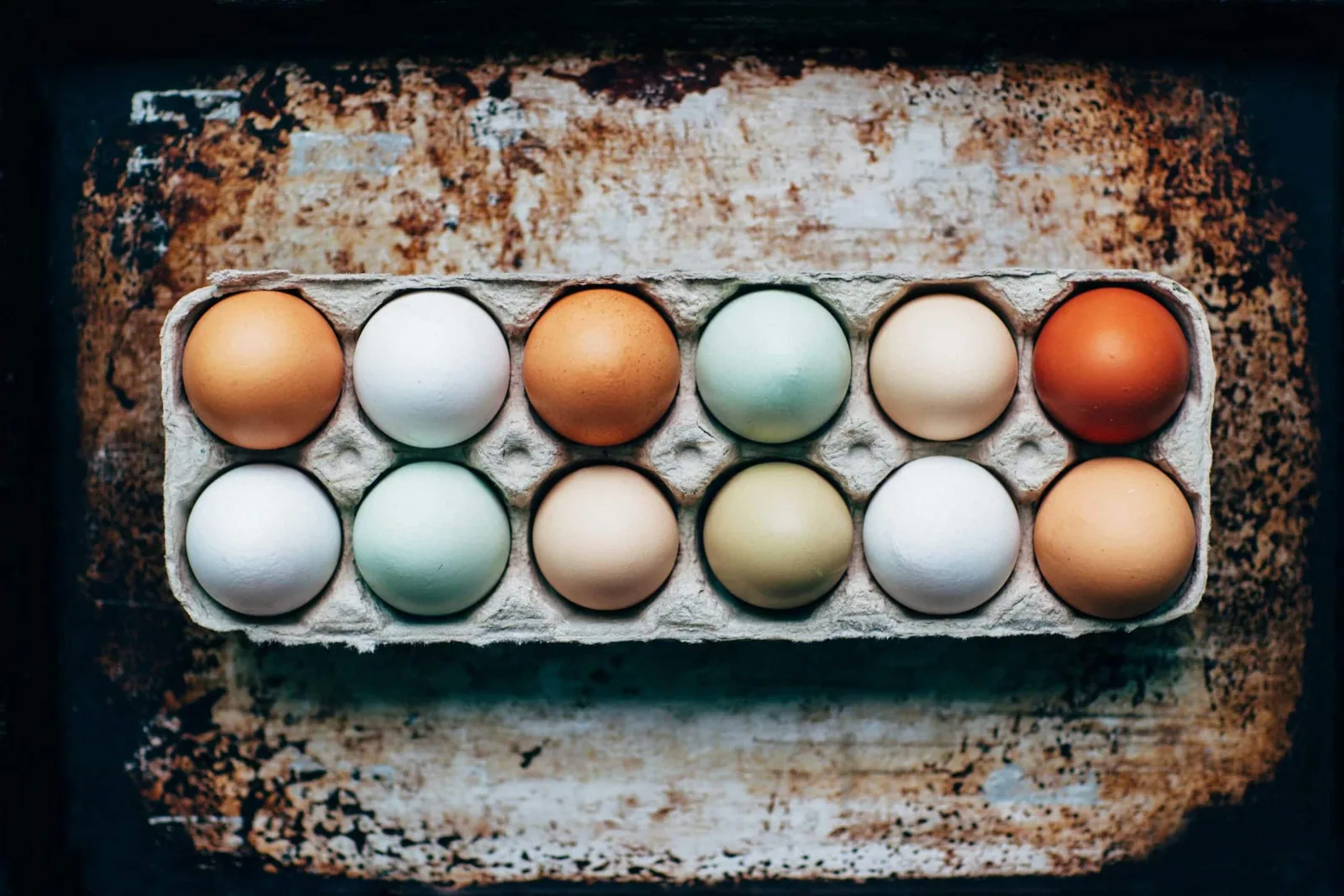
Eggs
Seafood – fish, crustaceans, molluscs
Dairy products – cheeses, yoghurts, fermented dairy products, milk
Processed meat products – bacon, sausages and smoked products are made of meat, but they contain various additives and substances that are not good for the body, and for that reason it is better to eat them in moderation.
Plant foods as sources of protein
Pulses – lentils, beans, chickpeas, peas, soya beans (and soya products: tofu, tempeh, etc.)
Nuts and seeds – almonds, pistachios, cashews, walnuts, hazelnuts, pecans, hemp seeds, pumpkin seeds, sunflower seeds, flax seeds, sesame seeds, nut butters.
Vegetables with a higher protein content – sweetcorn, broccoli, asparagus, Brussels sprouts and artichokes
Inspiration for nutritionally balanced meals full of protein
It is worth taking care over the ingredients when cooking and preparing food. Nor should we forget quality sources of protein, which improve our health and the functioning of our body. As mentioned above, the individual kinds and sources of protein need to be combined. Here are a few simple recipes with a very favourable and balanced ratio of amino acids.
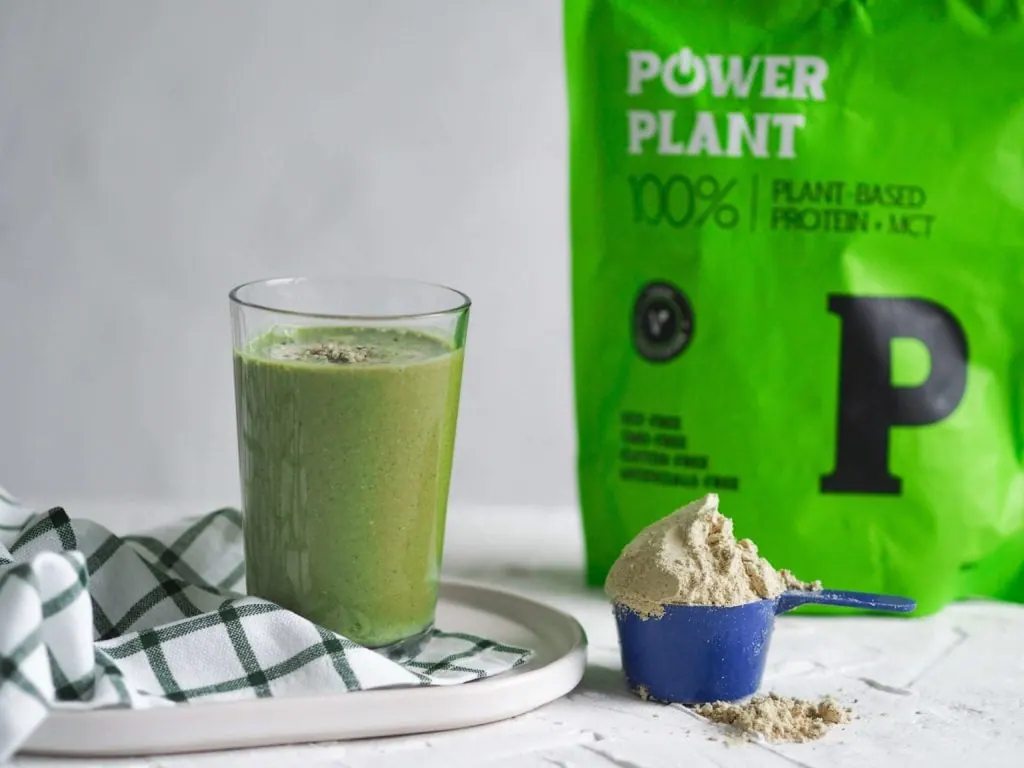
Banana and spinach protein drink
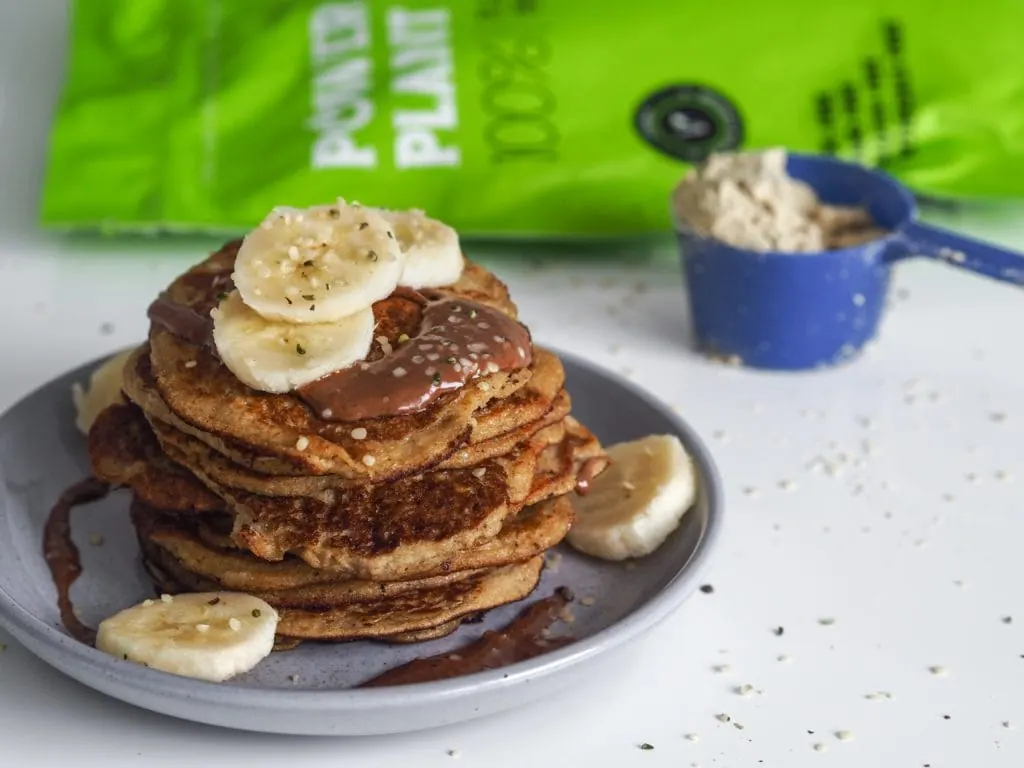
Quick gluten-free protein pancakes
Chicken with almond and sesame sauce

Summary
- Proteins are organic compounds made up of a large number of different amino acids joined into a single whole.
- Protein is a fundamental macronutrient that markedly influences the functioning of the human body.
- Without proteins the human body would not be capable of movement, immunity and other vital functions.
- An adult should take in approximately 0.8 g of protein per kilogram of body weight.
- All the proteins we take in from food contain some of each amino acid, but in different ratios.
- The body does not need all the essential amino acids at every meal.
If you want to keep your protein intake under control even on hectic days, clean proteins and snacks will help you. At Powerlogy you will find whey, vegan and collagen proteins and nut creams without unnecessary ingredients. You can add one scoop or spoonful to porridge, a smoothie or yoghurt and so increase your daily protein intake naturally. If you are looking for the best proteins from a Slovak brand, you will certainly find a variant in the Powerlogy range that fits your regime and goals.
Image source: Unsplash


Comments
There are no comments yet.